
Hi, what does the asterisk mean when selecting a strain? Thanks
Strains with * are the most popular ones (essentially a top 5).
 Secure checkout
Shop
Currency
More
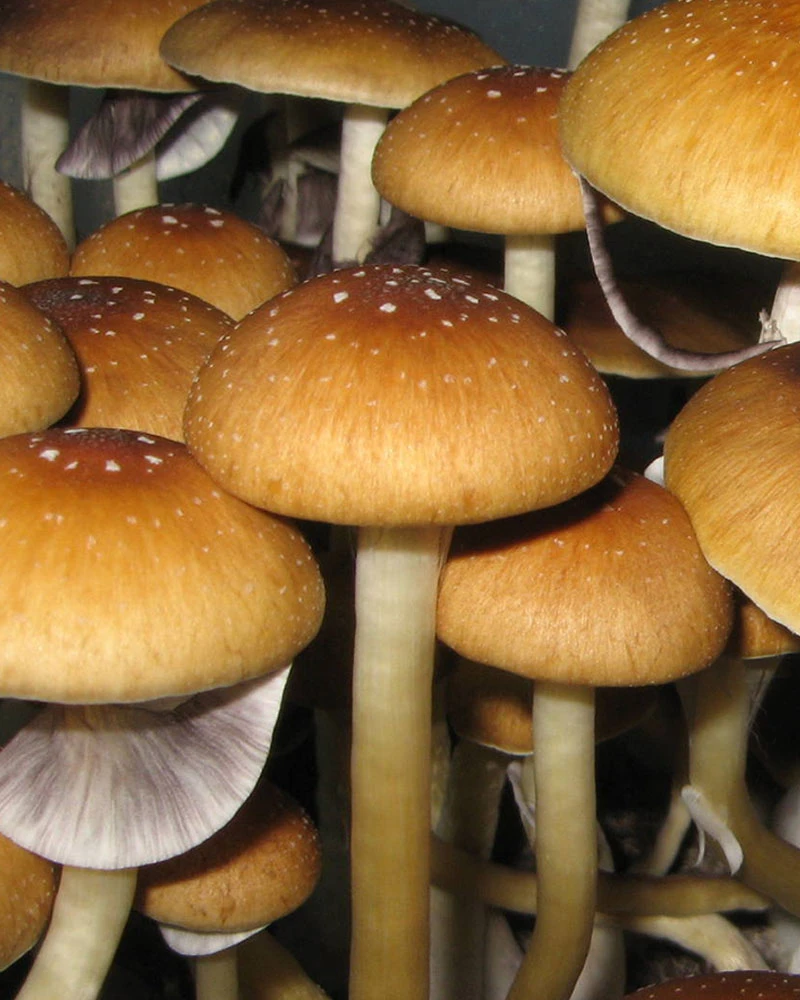
£8.00
If you want a standard spore syringe, that's fine. Everyone does them basically the same.
But if you want a seriously dense spore syringe that'll last you for years, we got 'em.
Vendors gaslight. "You don't need or want a packed spore syringe, because x,y,z." The truth is, a packed spore syringe is better than an unpacked one. The profit in giving as little spores as people will accept and training the masses that less is what you really want was a tactic even we conformed to. Spore vendor profiteering 101. Why sell a 27X syringe for £64 when you can sell 27 syringes for £432
The denser you go, the less solution you need to use to inject on to your microscopy slides. Or blast it with lots and see the difference! You will be amazed.
We sell clean syringes. 'Nuff said.
Any issues, order a replacement - it's a self-service button in your account so we don't even need to speak to you. Not that we don't like speaking to customers, we just know what it's like to be a customer and having to explain why you need a replacement is a hassle for you and us. We take it at face value, not with suspicion. We still make some profit regardless.
Spores contain an almost infinite mix of genetics. If a customer in a country where it was legal to cultivate this species did so, the spores wouldn't necessarily produce the same-looking mushroom they dropped from, or share its exact same characteristics.
Leucistic and Albino strains generally always produce whitish looking mushrooms, Red Boy can decide to drop red or blackish spores. And sometimes top cultivation labs grow repeatedly from spores then select the mushroom that looks closest to the strain they started from and repeat the process over and over till the point the spores have a higher chance of producing mushrooms with the characteristics they wanted. There's a lot of work that goes into it. But, there is a saying "A cube is a cube" and it generally exists for a reason. Interesting facts to know, one day we'll write a deeper blog post on it.
If you take a look at the about strain tab, you'll see plenty of interesting facts about some of these strains. Take everything with a pinch of salt until you do your own research though as this research wasn't done by us and we have no time or interest to trawl through 25 years of shroomery forum posts to fact check it all. That's your homework!
Do not attempt cultivation with this species of mushroom spore as magic mushrooms are illegal in many parts of the world currently.
Magic mushroom spores
The formal record, from Index Fungorum:
Psilocybe cubensis (Earle) Singer, Sydowia 2(1-6): 37 (1948). Basionym: Stropharia cubensis Earle 1906.
Index Fungorum, record 290107
What that line means: Earle named this mushroom first, in 1906, but filed it under a different genus, Stropharia. Singer moved it into Psilocybe in 1948, and published that move in a journal called Sydowia, volume 2, page 37. Earle keeps the brackets because the first name was his. A basionym is simply the original name a later one was built on.
The genus itself:
Psilocybe (Fr.) P. Kumm., Führ. Pilzk. (Zerbst): 21 (1871).
Index Fungorum, genus record 18418
What that line means: the same idea one level up. Fries used the name first; Paul Kummer raised it to a full genus in 1871, in a German field guide printed in Zerbst. Fries in the brackets, Kummer outside them.
“Psilocybe cubensis was first described in 1906 as Stropharia cubensis by American mycologist Franklin Sumner Earle in Cuba.”
Wikipedia, Psilocybe cubensis
“The name Psilocybe is derived from the Ancient Greek roots psilos (ψιλος) and kubê (κυβη), and translates as ‘bare head’.”
Wikipedia, Psilocybe cubensis
“It belongs to the fungus family Hymenogastraceae.”
Wikipedia, Psilocybe cubensis
What a family is: the rank above genus. Older books file Psilocybe under Strophariaceae; DNA work moved it to Hymenogastraceae, so you will see both depending on how old the book is.
The cap:
“The cap is 1.6–8 cm, conic to convex with a central papilla when young, becoming broadly convex to plane with age, retaining a slight umbo sometimes surrounded by a ring-shaped depression. The cap surface is smooth and sticky, sometimes with white universal veil remnants attached.”
Wikipedia, Psilocybe cubensis
In plain English: the cap is roughly 1.5 to 8 cm across. Young ones are cone-shaped or domed with a small raised bump in the middle — that bump is the papilla. Older ones open out flat and usually keep it, sometimes with a shallow ring-shaped dip around it. The surface is smooth and sticky to the touch, and can carry white flecks, which are what is left of the veil that covered the mushroom when it was young.
The stem:
“The hollow white stipe is 4–15 cm high by 0.4–1.4 cm thick, becoming yellowish in age.”
Wikipedia, Psilocybe cubensis
In plain English: the stem. 40 to 150 mm tall, 4 to 14 mm thick, hollow down the middle, white to start with and yellowing as it ages.
The gills:
“The narrow grey gills are adnate to adnexed, sometimes seceding attachment, and darken to purplish-black and somewhat mottled with age.”
Wikipedia, Psilocybe cubensis
In plain English: the gills reach the stem and join it (adnate), or meet it only narrowly (adnexed), and sometimes pull away from it altogether as the cap opens out (seceding). They start grey and turn purple-black in uneven patches as the spores ripen — that patchiness is what mottled means.
And the reaction the genus is known for:
“When bruised, all parts of the mushroom stain blue.”
Wikipedia, Psilocybe cubensis
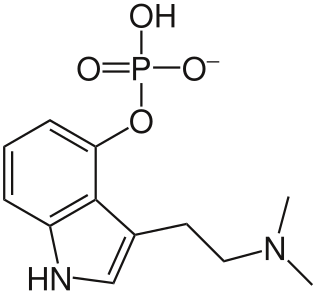
The blue is not psilocybin. It is what psilocybin becomes. Two enzymes taken from this species were described in 2020:
“We report two enzymes from Psilocybe cubensis that carry out a two-step cascade to prepare psilocybin for oxidative oligomerization that leads to blue products. The phosphatase PsiP removes the 4-O-phosphate group to yield psilocin, while PsiL oxidizes its 4-hydroxy group.”
Lenz, Wick, Braga, García-Altares, Lackner, Hertweck, Gressler & Hoffmeister, Angew. Chem. Int. Ed. 59(4): 1450–1454 (2020) · PubMed 31725937 · doi:10.1002/anie.201910175
In plain English: break the mushroom and two enzymes go to work in sequence. The first, PsiP, snips the phosphate group off psilocybin, which leaves psilocin. The second, PsiL, then oxidises that psilocin. The oxidised pieces link up with each other into short chains, and those chains are the blue you can see.
“MS and IR spectroscopy indicated the formation of a heterogeneous mixture of preferentially psilocyl 3- to 13-mers and suggest multiple oligomerization routes, depending on oxidative power and substrate concentration. The results also imply that phosphate ester of psilocybin serves a reversible protective function.”
Lenz et al. (2020) · PubMed 31725937
In plain English: the blue is not one compound but a mixture — chains of roughly three to thirteen linked units, in varying proportions depending on how much oxygen and how much starting material there is. That is why the colour varies from a faint blue-green to a deep ink stain. The last sentence is the neat part: the phosphate group that PsiP removes acts as a cap that keeps psilocybin stable while the mushroom is intact. Damage the mushroom and the cap comes off, which is why bruising is what triggers the colour.
“The spores are 11.5–17.3 x 8–11.5 µm, sub-ellipsoid, basidia 4-spored but sometimes 2- or 3-, pleurocystidia and cheilocystidia present.”
Wikipedia, Psilocybe cubensis
In plain English: a µm is a micrometre, a thousandth of a millimetre, so the spores are about 12 to 17 thousandths of a millimetre long. Sub-ellipsoid means slightly oval. Basidia are the cells on the gills that make the spores, normally four at a time. Pleurocystidia and cheilocystidia are sterile cells that sit on the face and the edge of the gill; they make no spores, and which ones a mushroom has helps tell species apart under the scope.
“Psilocybe cubensis is found on cow (and occasionally horse) dung, sugar cane mulch or rich pasture soil.”
Wikipedia, Psilocybe cubensis
“Psilocybe cubensis is a pan-tropical species, occurring in the Gulf Coast states and southeastern United States, Mexico, in the Central American countries of Belize, Costa Rica, Panamá, El Salvador and Guatemala, the Caribbean countries Cuba, the Dominican Republic, Puerto Rico, Guadalupe, Martinique, and Trinidad, in the South American countries of Argentina, Bolivia, Brazil, Colombia, French Guiana, Paraguay, Uruguay and Peru, Southeast Asia, including Thailand, Vietnam, Cambodia and Malaysia, India, Australia, Fiji, and possibly Nepal and Hawaii.”
Wikipedia, Psilocybe cubensis
A paper published in Proceedings of the Royal Society B in March 2026 named the species' closest wild relative, Psilocybe ochraceocentrata, from grassland in South Africa and Zimbabwe. The two last shared an ancestor around 1.5 million years ago — far earlier than the long-held assumption that P. cubensis reached the Americas with cattle in the 1500s.
“Discovery of the closest free-living relative of the domesticated ‘magic mushroom’ Psilocybe cubensis in Africa”. Proc. R. Soc. B 293(2066): 20252270.
Bradshaw, Sharp, Van Der Merwe, Tremble & Dentinger, 11 March 2026 · doi:10.1098/rspb.2025.2270 · registry record
“Psilocybin… is a naturally occurring tryptamine alkaloid and investigational drug found in more than 200 species of mushrooms, with hallucinogenic and serotonergic effects.”
Wikipedia, Psilocybin
In plain English: an alkaloid is a nitrogen-containing compound made by a plant or fungus. Tryptamine describes its chemical skeleton, which is the same one serotonin is built on. Serotonergic means it acts on the body's serotonin receptors. Investigational drug means it is going through formal medical trials.
“Psilocybin itself is biologically inactive but quickly converted by the body to psilocin.” “Psilocybin is transformed into psilocin by dephosphorylation mediated via phosphatase enzymes.”
Wikipedia, Psilocybin
In plain English: psilocybin does nothing on its own. Enzymes called phosphatases strip a phosphate group off it — that is dephosphorylation — and what is left behind is psilocin, which is the active compound.
“In 1958, the Swiss chemist Albert Hofmann isolated psilocybin and psilocin from the mushroom Psilocybe mexicana.”
Wikipedia, Psilocybin
“Fresh mushrooms had previously been widely available, even in shops.”
Wikipedia, Legal status of psilocybin mushrooms
“Section 21 of the Drugs Act 2005 made fresh psychedelic mushrooms (‘fungi containing psilocybin’) a Class A drug.” “From 18 July 2005 both fresh and ‘prepared’ (that is, dried, cooked or made into a tea) psilocybin mushrooms became illegal.”
Wikipedia, Legal status of psilocybin mushrooms
In plain English: before that date fresh mushrooms sat in a gap in the law and were sold openly, including in shops. Section 21 of the Drugs Act 2005 closed the gap. Since 18 July 2005 fresh and dried both count as Class A, the most serious category under the Misuse of Drugs Act 1971.
“Mushroom spores, which do not contain psilocybin, are not regulated.”
Wikipedia, Legal status of psilocybin mushrooms
In plain English: the law controls psilocybin and psilocin. A spore contains neither, so it is not a controlled substance. That is the basis on which spores can be sold and studied here, and it is why growing is a different matter entirely.
Everything we sell is sold for microscopy, research and collecting.
| Variety / Strain | A Strain, A+ Albino, Amazonian, APE Revert, Australian Gold Cap, B+, Ban Hua Thai, Blue Magnolia, Blue Meanie, Burma, Cambodian, Corumba Brazil, Costa Rican, E4K, Ecuador, Escondido, Fiji, Full Moon Party, Golden Halo, Golden Teacher, Guapiles, Gulf Coast, Hawaiian, Hitchhiker, Huautla, Jedi Mind Fuck, Koh Samui, Koh Samui Super Strain, Leucistic Burma, Leucistic Ecuador, Lizard King, Malabar Coast, Mazatapec, McKennaii, Mexican Dutch King, Moby Big, Nepal Chitwan, Nezuko, Our Selection, Pakalensis, Penis Envy, Penis Envy Uncut, Pensacola, Pink Buffalo, Psylocybe Fanaticus, Puerto Rican, Redboy, Rusty White, Stargazer, Take Mountain, Taman Negara, TEX PE6 (Penis Envy), Texas Yellow Cap, Tidal Wave, Treasure Coast, VZ3 (Venezuela), White Golden Teacher, Yosterizii, Z-Strain |
|---|
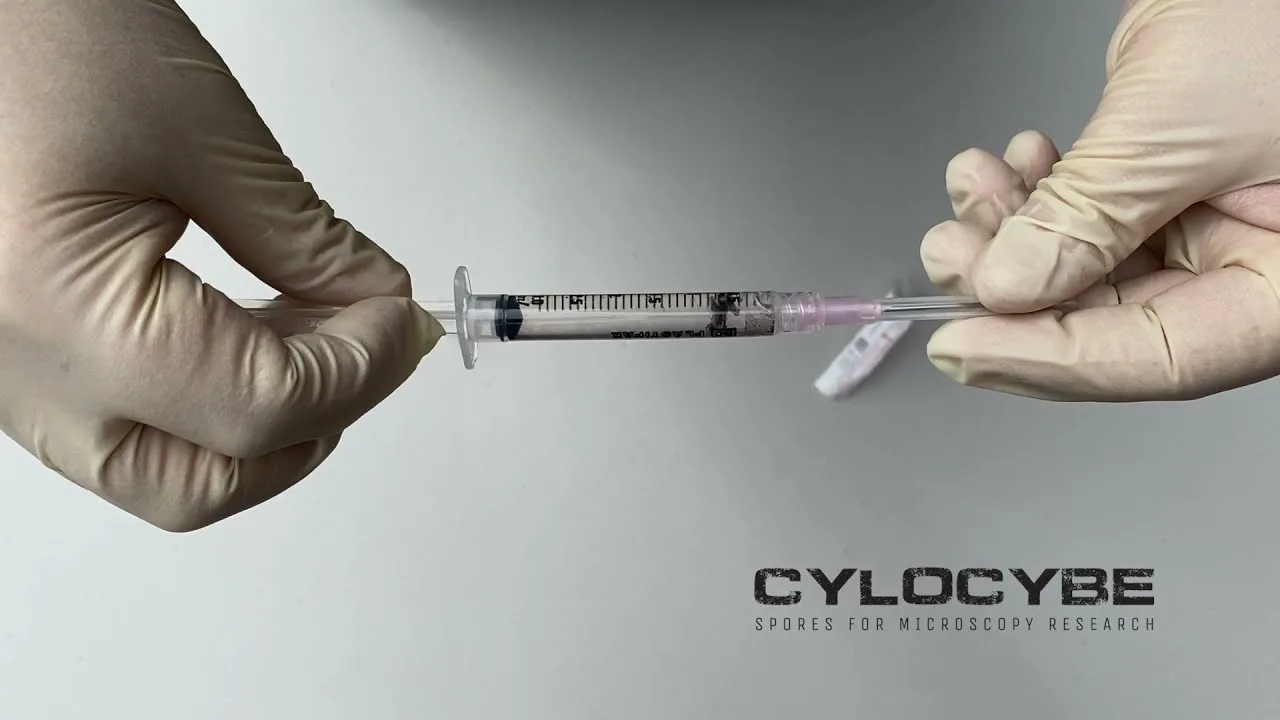
Playing it here streams from YouTube, they then see you’re on our site. Click “Watch on YouTube” if you don’t want that.
Still stuck? Get in touch.
| Where | Service | Price | Royal Mail aims for |
|---|---|---|---|
| Ireland, France, Germany, Denmark, Monaco | International Standard (not tracked) | £3.80 | 3-5 working days |
| Ireland, France, Germany, Denmark, Monaco | International Tracked | £9.95 | 3-5 working days |
| The rest of Europe (52 more countries) | International Standard (not tracked) | £3.80 | 3-5 working days |
| The rest of Europe (52 more countries) | International Tracked | £9.95 | 3-5 working days |
| Australia, New Zealand, Singapore and 23 more | International Economy (not tracked) | £4.30 | 14-21 working days |
| Australia, New Zealand, Singapore and 23 more | International Standard (not tracked) | £4.60 | 6-7 working days |
| Australia, New Zealand, Singapore and 23 more | International Tracked | £11.95 | 5-7 working days |
| United States | International Economy (not tracked) | £4.30 | 14-21 working days |
| United States | International Standard (not tracked) | £4.60 | 6-7 working days |
| United States | International Tracked | £11.25 | 5-7 working days |
| Everywhere else we ship | International Economy (not tracked) | £4.30 | 14-21 working days |
| Everywhere else we ship | International Standard (not tracked) | £4.60 | 6-7 working days |
| Everywhere else we ship | International Tracked | £11.90 | 5-7 working days |
“If you're the recipient please contact the sender. They will contact us to make enquiries on your behalf.” Royal Mail, What to do if your item doesn't arrive
Tracked 24 and Tracked 48 (UK). “We aim to deliver Tracked 24® the next working day and Tracked 48® / Tracked Returns with 2-3 working days.” “If the item hasn't been delivered by the due date plus 7 working days” a claim can be considered. Royal Mail, What to do if your item doesn't arrive
International Standard and International Tracked, to Europe. “We aim to deliver within 3 - 5 working days. If the item hasn't been delivered by the due date plus 20 working days the sender might be able to claim for compensation.” Royal Mail, What to do if your item doesn't arrive
International Tracked, rest of the world. “We aim to deliver within 5 - 7 working days.” “If the item hasn't been delivered by the due date plus 25 working days the sender might be able to claim for compensation.” Royal Mail, What to do if your item doesn't arrive
International Standard, worldwide. “We aim to deliver within 6 - 7 working days.” Then “the due date plus 25 working days” before a claim can be made. Royal Mail, What to do if your item doesn't arriveRoyal Mail add: “Please note, early claims cannot be processed.” So there is genuinely nothing either of us can file before those days have passed. Get in touch anyway if you are worried . we would rather know early, and we can check the tracking with you in the meantime. Royal Mail also count working days as Monday to Friday, and they say to add an extra working day if you have a Redirection in place.
International Standard and International Economy. “Postage refund and compensation on the basis of actual loss where evidence of posting and value can be provided. This is subject to the maximum payable being the lower of the market value or £20.” Royal Mail, International compensation available
International Tracked. “Postage fee refund plus compensation on the basis of actual loss, where evidence of posting and value can be provided. This is subject to the maximum payable being to the lower of the market value and £50.” Royal Mail, International compensation availableThat is what Royal Mail pays us, and it is capped low. What you get from us is covered by our own replacements policy, which does not depend on Royal Mail paying out.
Replacement cover, explained
This product is covered if something goes wrong, so we can make sure you get another kit to try again with. The last thing we want is customers abandoning this hobby because of a mistake. So, if something goes wrong within 12 weeks of us dispatching it to you then follow the steps below to get a new kit on the way.
How a claim works
No photos, no explanation, nobody to convince.
We built this shop to be human. When you need a replacement, take it.
Hi, what does the asterisk mean when selecting a strain? Thanks
Strains with * are the most popular ones (essentially a top 5).
Hiya, will Cylocybe expand their range of spores in the future to include other genera such as Panaeolus?
We will when we can, it’s unfortunately quite a bit more difficult to get our hands on those species than it used to be since switching away from our old supplier who was causing us some issues in regards to quality.
Hey just wondering if these mushrooms have been inoculated?
Apologies, I don't understand the question. These are microscopy spores if that answers it for you.
So am I correct in thinking that I'll need to buy both a solution (approx £14.95 for 12ml) as well as a grow kit (approx £19.99)? Please let me know asap as I'm ready to order, but I just want to get all of the required elements without spending too much money lol
Regardless of our own personal opinions; cultivating this species has been illegal in the UK since 2005.
Magic mushrooms aren’t illegal like Cannabis is - they are class A restricted and sit beside heroin and cocaine on that list.
...Some people may find that fact more mind bending than the chemical itself, but that’s the law. If we sold this product for anything other than it’s intended purpose (viewing under the microscope) then we’d have our business and our freedoms taken away in a heartbeat.
Please use our products responsibly and legally.
Are you ever going to stock exotic strains such as tampanensis again? I notice your page for 1ml spores has now disappeared...
1ml exists on the site. We are trying to source exotics, but it’s a nightmare right now getting ahold of them.
Only logged in customers who have purchased this product may leave a review.
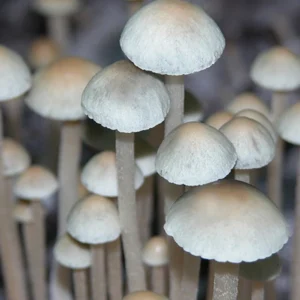
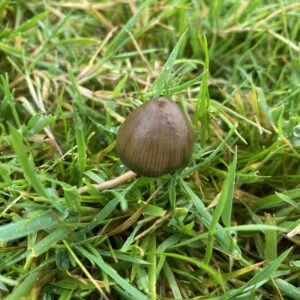
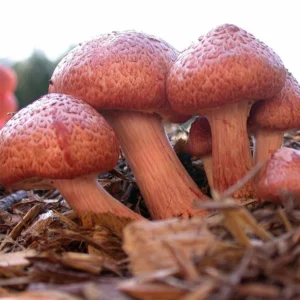
Jason Foster (verified owner) –
Fantastic service 👍 very helpful, highly recommend to anyone A1 Thank you .
Jonathan Hall (verified owner) –
Anonymous (verified owner) –
I am so happy to have found this lovely company. I’m definitely a new loyal customer!! The quality is superb from the products to the customer service!!!
Anyone reading this that is checking the reviews before ordering should not give it a second thought. These guys offer a great service and great quality items! 🤩
Yuriy (verified owner) –
Professional package, fast shipment
Patrick Linsdell (verified owner) –
Leong C. (verified owner) –
Good serves and products
Jack Lefevre (verified owner) –
Amazing spores really quick to reply to any questions good dispatch time just amazing all round highly rrecommend will deffo be ordering again in the near future✌️❤️🍄
Anonymous (verified owner) –
brilliant
Anonymous (verified owner) –
They dont look dark with spores but I'm new to this so won't prejudge.. Love the note from Ruth
Anonymous (verified owner) –