Skip to content

Home / Mushroom Cultivation / Liquid Cultures / Pink Oyster Liquid Culture

Live culture Pink Oyster Liquid Culture

Liquid Cultures

Pink Oyster Liquid Culture

Live Pleurotus djamor mycelium suspended in sterile nutrient broth, ready to inject into grain. A fast, warm-loving oyster strain that suits a first grow.

£20.00

Inject into sterilised grain. Best used soon after it arrives.

Single species
Pure Pleurotus djamor, not a spore mix
Warm grower
Colonises fast at 24 to 30C
Keep it warm
Tropical strain, do not refrigerate or freeze
SpeciesPleurotus djamor (pink oyster)
Colonisation24 to 30C, dark
First growthA few days
Full colonisationOne to two weeks
RateAbout 1 to 2 ml per pound of grain
StorageWarm room temperature, never refrigerated

The short version

This is a syringe of living mushroom mycelium, not spores. The Pink Oyster strain is already growing in a sterile sugar broth, so when you inject it into sterilised grain it takes hold faster than a spore syringe and skips the wait for spores to germinate.

Pleurotus djamor is a tropical oyster mushroom. It colonises quickly in warm rooms and is one of the more forgiving gourmet strains to start with. Because it comes from the tropics it dislikes the cold, so store it warm and use it reasonably soon.

WHAT IT IS

A live culture, ready to inject

Each syringe holds live mycelium of Pleurotus djamor, the pink oyster, suspended in a sterile nutrient broth. The mycelium is the white root-like network the mushroom grows from. Because it is already alive and feeding, it spreads through fresh grain faster than spores, which first have to germinate.

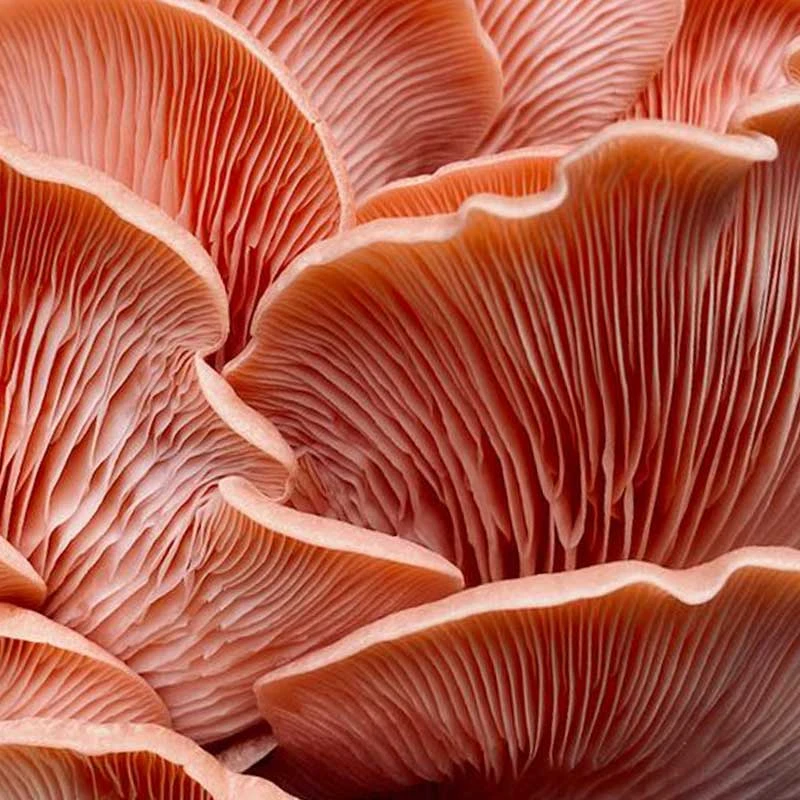
Pink oyster is a warm-climate oyster strain known for quick growth and dense clusters of pink fruit. It is one of the easier gourmet oysters for a first attempt, as long as you can keep it warm.

SpeciesPleurotus djamor (pink oyster)
FormLive liquid culture in a syringe
Colonisation temperature24 to 30C
Fruiting temperatureAbout 20 to 28C, no cold shock needed
Humidity at fruiting85 to 95 percent
AirNeeds strong fresh air exchange
Grows onSterilised grain, then straw or hardwood sawdust

HOW TO USE IT

Inoculating grain

The usual path is to inject the culture into sterilised grain to make spawn, then use that spawn to run a bulk substrate such as pasteurised straw or supplemented sawdust. Work clean. A still-air box or a flow hood lowers the chance of contamination.

1

Shake the syringe

Shake well first. This breaks up the mycelium and spreads it evenly through the liquid so each injection carries live culture.

2

Flame the needle

Heat the needle with a flame until it glows, then let it cool for a moment. Do not let the cooled needle touch anything before you inject.

3

Inject the grain

Push the needle through the injection port or self-healing patch on the lid and inject. A common rate is about 1 to 2 ml per pound of sterilised grain, so roughly 1 to 2 ml for a 1 litre jar and about 5 to 10 ml for a 2.3 kg bag.

4

Incubate warm

Keep the grain at 24 to 30C in the dark. You should see the first white growth within a few days, with full colonisation usually in one to two weeks.

One syringe goes a long way. At 1 to 2 ml per jar, a 10 ml syringe inoculates several 1 litre jars if you keep everything sterile.

STORAGE

Keep it warm, never cold

Pink oyster is a tropical strain and the cold harms it, so it is not stored like most other cultures. Do not refrigerate it. Fridge temperatures can weaken or kill this species. Keep it at warm room temperature, around 20 to 22C, out of direct light, and use it within a few months for the best result.

Never freeze it. Freezing forms ice crystals that puncture the cells and kill the mycelium. If you need to hold it for a while, keep it somewhere steady and warm rather than in the fridge.

GOOD TO KNOW

It is a heavy spore producer

Pink oyster fruits drop a lot of pink spores as the caps open and flatten. Some people are sensitive to inhaled mushroom spores, so give the fruiting area good air movement and harvest while the cap edges are still curved, before they flatten and release. A dust mask helps when you work close to mature clusters.

The fruit itself does not keep. Once harvested, pink oyster softens within a day or two, so pick it just before you plan to cook it.

WHAT IT IS NOT

Not a finished kit

This is a starting culture, not a ready-to-fruit kit. You supply the sterilised grain, the clean working space and the warm grow area. If this is your first grow, plan the grain and substrate steps before the culture arrives, since it is best used fresh.

Common questions

Frequently asked

Live mycelium already growing in nutrient broth, so it takes off faster than a spore syringe.

About 1 to 2 ml per pound of grain, so roughly 1 to 2 ml for a 1 litre jar and about 5 to 10 ml for a 2.3 kg bag.

No. Pink oyster is tropical and cold sensitive, so keep it at warm room temperature and never freeze it.

You usually see white growth within a few days and full grain colonisation in one to two weeks at 24 to 30C.

Use the grain spawn to run pasteurised straw or supplemented hardwood sawdust.

It is already alive, so colonisation starts sooner, and a clean culture is a single known strain rather than a mix.

Yes. Pink oyster drops heavy pink spores at fruiting. Keep air moving and harvest before the caps flatten.

Ask the community

Questions and answers

No questions yet. Yours could be the first.