
Home / Mushroom Cultivation / Additives & Chemicals / Urea Granules (1000g)
Additives & Chemicals
Urea Granules (1000g)
A concentrated dry nitrogen supplement for Phase I mushroom compost. Mixed in at the start of composting to raise nitrogen and feed the microbes that heat and condition the substrate.
Out of stock
Out of stock
Want to know the moment it returns?
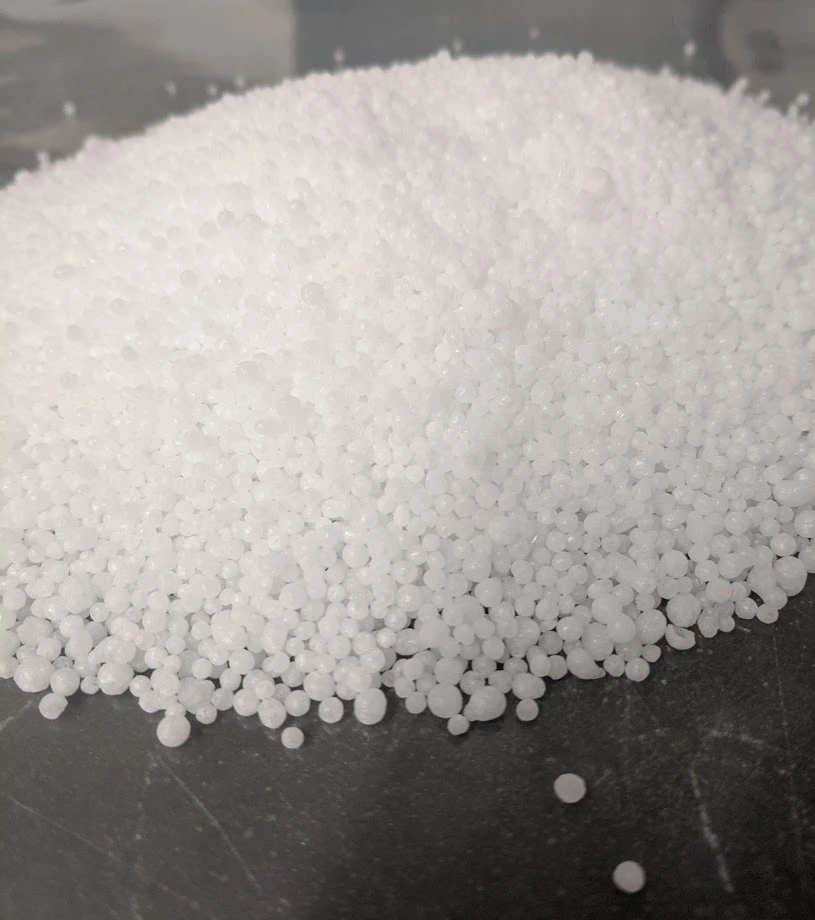
Supplied as dry white granules. Keep sealed and dry.
About 46 percent N, one of the most concentrated dry nitrogen sources
A Phase I supplement, not a feed for colonising grain or kits
Releases ammonia as it breaks down, so add it early and drive it off in Phase II
The short version
Urea is a simple dry chemical, NH2CONH2, that carries about 46 percent nitrogen by weight. In mushroom growing it has one job. It is a nitrogen supplement for Agaricus (button mushroom) compost, mixed into the bulk straw or manure at the start of Phase I to raise the nitrogen level and feed the bacteria and fungi that heat and condition the pile.
It is added in small amounts only, and any ammonia it produces must be driven off during Phase II before you spawn. It is not a tonic, not a substrate on its own, and not something you add to grain spawn, a finished fruiting block, or a grow kit.
What it is
What urea actually is
Urea is a white, odourless granular chemical with the formula NH2CONH2 and CAS number 57-13-6. It carries about 46 percent nitrogen by weight, which makes it one of the most concentrated dry nitrogen sources available. It dissolves readily in water. A fresh solution is close to neutral and turns slightly alkaline as the urea slowly breaks down to ammonia.
In agriculture it is a standard nitrogen fertiliser. In mushroom growing it is used as a nitrogen supplement for Agaricus compost, alongside bulk organic matter and gypsum. It is the nitrogen the process needs, not the urea itself.
| Chemical | Urea, NH2CONH2 |
|---|---|
| CAS number | 57-13-6 |
| Nitrogen | About 46 percent by weight |
| Form | White granules |
| Molecular weight | 60.06 |
| Solubility | About 1080 g per litre water at 20 C |
| Melting point | About 133 C, then decomposes |
| Solution pH | Near neutral, fresh; rises towards alkaline as it breaks down |
How to use it
Using urea in mushroom compost
Urea is a Phase I input. It is spread over the bulk ingredients and mixed in thoroughly at the start of composting, so the microbes have nitrogen to work with as the pile heats. Use it only with high-carbohydrate bulk such as straw, and only in small amounts.
You are working towards a finished compost nitrogen of roughly 1.8 to 2.2 percent on a dry weight basis, with the starting Phase I carbon to nitrogen ratio around 18 to 20. Treat urea as one part of that nitrogen budget rather than a fixed dose, because the right amount depends on your bulk materials and the other supplements in your formula.
Add at the start
Mix urea into the bulk straw or manure as you build the Phase I stack. Not part way through, and not at spawning.
Use small amounts
Aim for a finished compost nitrogen of about 1.8 to 2.2 percent dry weight, and spread it evenly. More nitrogen is not better. Excess shows up as a strong ammonia smell and a dark, greasy, slow pile.
Drive off the ammonia
Urea breaks down to ammonia. Phase II pasteurisation and conditioning must convert and remove it before spawning. Ammonia above about 0.07 percent at the end of Phase II is often inhibitory to mushroom spawn.
Spawn only when clear
Do not spawn while you can still smell ammonia. The compost should be sweet and free of that sharp smell first. A test kit gives more certainty than the nose alone.
The single most common mistake is adding too much urea, or adding it late. Either leaves free ammonia in the compost, and ammonia is toxic to mushroom mycelium.
Storage and safety
Storing and handling
Store the granules in a dry, cool, well ventilated place and keep the pouch sealed. Urea draws in moisture from the air, so keep it away from damp. Keep it apart from strong acids, strong bases, strong oxidisers, hypochlorites and nitric acid, which it reacts with.
Urea is not classified as a hazardous substance, but it can cause mild skin and eye irritation, so wash your hands after handling and avoid getting it in your eyes. Do not eat, drink or smoke while using it. If heated strongly it decomposes and gives off ammonia and oxides of nitrogen, so keep it off hot surfaces and away from flame.
What it is not
What urea is not for
Urea is not a substrate and not a grow medium on its own. It is not a feed you sprinkle onto colonising grain, a finished fruiting block, or a grow kit, and it is not a foliar spray or a tonic for mushrooms. Used that way it simply produces ammonia and harms the mycelium.
It belongs only in the early composting stage, mixed into bulk material, where there is time for the nitrogen to be used and the ammonia to be driven off before any mushroom culture goes near it.
Common questions
Frequently asked
There is no single fixed dose. Work to a finished compost nitrogen of about 1.6 to 1.8 percent dry weight, using urea as part of your total nitrogen, and adjust to your bulk materials. Use small amounts, spread it evenly, and add it at the start of Phase I.
Urea breaks down to ammonia. A strong smell usually means too much nitrogen, or that Phase II has not yet driven the ammonia off. Do not spawn until that smell has gone.
No. Urea is only for the composting stage. Added to colonising grain or a finished block it produces ammonia and damages the mycelium.
In a dry, cool, well ventilated place with the pouch sealed. It absorbs moisture from the air, so keep it away from damp, and away from acids and oxidisers.
It is not classified as hazardous, but it can mildly irritate skin and eyes. Wash your hands after use and keep it out of your eyes. Do not heat it, as it then releases ammonia and oxides of nitrogen.
Ask the community
Questions and answers
No questions yet. Yours could be the first.
Sold as an agricultural and horticultural input for legal composting and gourmet mushroom cultivation. Keep out of reach of children. Not for human or animal consumption.