
Home / Mushroom Cultivation / Spawn & Substrates / Vermiculite
Spawn & Substrates
Vermiculite
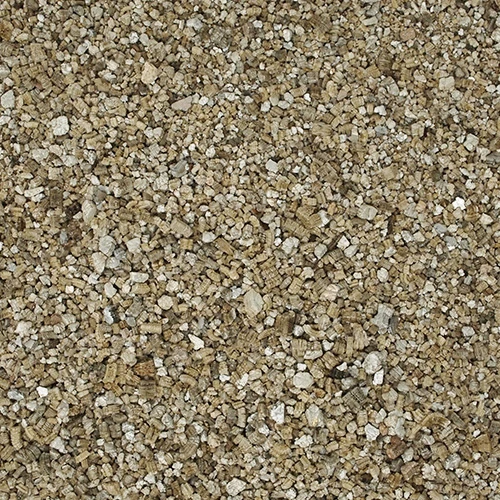
Expanded mineral flake that soaks up water and lets it go slowly. The standard moisture buffer for PF Tek cakes, bulk coir mixes and casing layers.
Choose your option
Horticultural grade, asbestos free.
Modern stock, asbestos free, no fertiliser added
Soaks up several times its own weight and releases it slowly
Nothing grows on it, so it adds structure without feeding contaminants
The short version
Vermiculite is a natural mica mineral that is heat treated until it puffs up into light, spongy gold-brown flakes. Those flakes hold a lot of water and let it back out slowly, which is exactly what you want around colonising mycelium.
It does not feed mould or bacteria itself. That is why it turns up in almost every beginner recipe: PF Tek cakes, coir and vermiculite bulk substrate, and as a casing layer on top of a colonised block.
WHAT IT IS
A puffed-up mineral, not a chemical
Vermiculite starts as a mica-like mineral made of hydrated magnesium, aluminium and iron silicates. When it is heated quickly it exfoliates, meaning the layers spring apart and trap thousands of tiny air pockets. The flake expands many times its original size and becomes light and spongy.
The result is inert, sterile and roughly pH neutral. It holds water well and has no smell. Because nothing grows on the mineral itself, it adds water and an open structure to a mix without giving contaminants anything to eat. Horticultural grade vermiculite sold today is tested and asbestos free.
| Material | Exfoliated (heat expanded) vermiculite mineral |
|---|---|
| Grade | Horticultural, fine to medium flake |
| pH | Close to neutral |
| Water holding | Several times its own dry weight |
| Other notes | Inert, sterile, odourless, no fertiliser added |
HOW TO USE IT
Three common jobs in cultivation
Vermiculite does the same thing in each recipe: it carries water and keeps the mix open so air and mycelium can move through it. The three usual jobs are PF Tek cakes, bulk substrate and a casing layer.
PF Tek cakes
The classic ratio is 2 parts vermiculite, 1 part brown rice flour, 1 part water by volume. Mix the vermiculite and water first and let it drink its fill, then fold in the brown rice flour so each flake is coated. Pack loosely into half pint jars to about half an inch below the rim, then top with a layer of dry vermiculite as a contamination barrier before sterilising.
Bulk substrate
Vermiculite is often mixed with coco coir to make a simple, water holding bulk substrate. It loosens the coir and acts as a reservoir so the block stays evenly moist while it colonises.
Casing layer
A casing layer is a thin, non nutritious top layer spread over a fully colonised substrate. It holds surface moisture and gives the mycelium a humid skin to pin from. Vermiculite suits this job because it holds water but stays inert, so it does not feed contaminants on the open surface. Apply a thin layer once the substrate below is colonised, then keep it damp.
Lightly dampen vermiculite before you handle dry flake. A quick mist keeps the dust down and makes it much easier to mix.
STORAGE AND CARE
Keep it dry until you need it
Store the bag sealed in a dry place. Dry vermiculite keeps indefinitely. It does not rot or expire, so a part used bag is fine for the next grow as long as it stays clean and dry.
When opening a fresh bag or moving large amounts, work in a ventilated space and consider a simple dust mask. The dust is a nuisance rather than a hazard with modern horticultural stock, and a light misting settles it.
WHAT IT IS NOT
It does not feed your culture
Vermiculite is a moisture buffer and a structure builder, not a food source. On its own it provides no nutrition for mycelium, which is the whole point of using it in a casing layer. The nutrients come from grain, brown rice flour, coir mixes or other substrate, not from the mineral.
It is also not a drainage material. If you want a mix to shed water rather than hold it, that is the job of perlite, not vermiculite.
Common questions
Frequently asked
Fine to medium horticultural vermiculite is the usual choice. It holds and releases water well and packs nicely into jars and casing layers.
Horticultural vermiculite sold today is tested and asbestos free. The old contamination was tied to one historic mine that closed. Keep dust down by misting it lightly.
No. Kept dry and sealed it lasts indefinitely, so a part used bag is fine for your next grow.
Vermiculite holds water, perlite drains and adds air. For PF Tek, coir mixes and casing you want the water holding of vermiculite.
It is sold clean and inert. In PF Tek it gets sterilised in the jar with the rest of the mix. For a casing layer many growers pasteurise the casing mix first to be safe.
Ask the community
Questions and answers
No questions yet. Yours could be the first.
Supplied for legal gourmet mushroom cultivation and microscopy. We sell no spores or cultures of controlled species.