
Home / Mushroom Cultivation / Spawn & Substrates / Millet Grain
Spawn & Substrates
Millet Grain
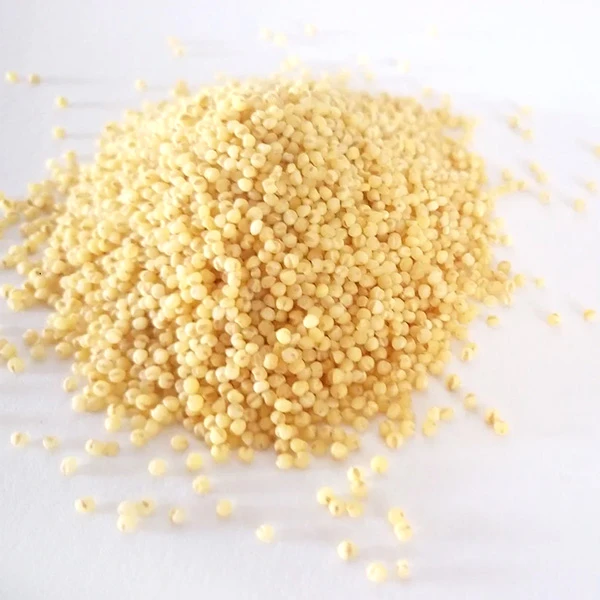
Small, hard millet kernels for making grain spawn. The fine size packs many more growing points into each jar, so colonised spawn breaks up well and spreads fast through bulk substrate.
Out of stock
Want to know the moment it returns?
Clean, food-grade grain. Sold for legal gourmet cultivation and microscopy work.
Roughly 8,000 kernels per kg, against about 3,000 for rye, so more points to start growth
The pale grain shows up green or other mould early, so problems are caught sooner
Millet dries out more slowly than rye, so colonising grain keeps the moisture mycelium needs
The short version
Millet is a small cereal grain used to make mushroom spawn. You hydrate it, sterilise it in jars or bags, then inoculate it with a culture. Once the grain is fully white with mycelium it is mixed into a bulk substrate to start fruiting.
The small kernel size is the point. More kernels per kilogram means more separate starting points, faster and more even colonisation, and spawn that crumbles apart cleanly when you mix it in.
What it is
What millet grain is for
Grain spawn is the bridge between a small culture and a bulk grow. The mycelium first eats through a jar of nutritious grain, then that grain is used to seed a much larger volume of substrate such as supplemented sawdust, straw or a coir based mix.
Millet is one of the two grains most used for this, alongside rye. Its advantage is size. Because the kernels are so much smaller than rye, the same jar holds far more separate points for mycelium to take hold. Colonised millet also stays loose and free running, so it shakes up and breaks apart well when you spawn to bulk.
How to use it
Making grain spawn from millet
These are the usual steps. Exact soak and dry times depend on your kit and the room, so judge by feel rather than the clock alone.
Soak
Cover the millet with water at roughly a 1 to 2 grain to water ratio and leave it to soak. Twelve to twenty four hours is common. Changing the water once partway through gives a cleaner start. The small kernels can over hydrate if left too long, so judge by feel rather than soaking past the point where they are wet through.
Simmer and drain
A short simmer of around ten to fifteen minutes helps hydrate the kernels through. This step is optional with millet, which soaks well on its own. Drain well, then spread the grain out to surface dry for thirty to sixty minutes. You want kernels that are wet inside but dry to the touch, with no free water pooling in the jar.
Jar and sterilise
Load into jars or filter bags and pressure sterilise at 15 PSI for ninety to one hundred and twenty minutes. Fill jars about two thirds so there is room to shake. Let everything cool fully to room temperature before you open anything.
Inoculate and colonise
Add your culture, whether liquid culture, an agar wedge or finished spawn, working as cleanly as you can. Hold the jars at about 21 to 24 C in the dark. Shake when growth is established to spread the points around.
Spawn to bulk
When the grain is fully white, mix it into your bulk substrate. A common range is 1 part spawn to 2 to 4 parts substrate by volume, which is roughly 20 to 33 percent spawn. More spawn gives faster colonisation and better resistance to contamination.
More spawn is not free yield. Going from a low ratio to a moderate one cuts colonisation time and contamination risk noticeably, but pushing the ratio very high gives only a day or two more and wastes grain. Some growers report little to no extra benefit at very high ratios, and possibly a slight first flush dip, so a moderate ratio is the usual choice.
Storage
Storing the dry grain
Keep millet in a cool, dry place in a sealed, food grade, airtight container. The grain readily takes up moisture from the air, and damp grain spoils, so an airtight tub matters more than it might seem.
Good to know
What it is not, and what to watch
This is plain food grade grain, not a finished or pre sterilised product. It is not ready to inoculate straight from the bag. It needs hydrating and sterilising first, and it has no nutrients added beyond what the grain naturally holds.
Unhulled millet is preferred for spawn because the coat slows water uptake and helps stop clumping during cooking. Hulled millet soaks up water too fast, turns sticky and clumps, which creates wet anaerobic pockets where bacteria do well.
The small size has a trade off. Millet has less starch than rye, so some growers find it a little less nutritious for slow species, and the tiny kernels scatter easily and get everywhere when you handle them. For most home grows neither point is a problem.
Common questions
Frequently asked
Smaller kernels give more starting points per jar, the grain stays loose for easy mixing, and it shows mould early. Rye holds more starch and is a little more forgiving, so it is still a fine choice.
For reliable grain spawn, yes. Grain is high in nutrients and needs proper pressure sterilisation at 15 PSI to run cleanly. Boiling alone is not enough.
Unhulled is the usual pick for spawn. The coat slows water uptake and helps stop the grain clumping and going sticky during cooking.
A common range is 1 part spawn to 2 to 4 parts substrate by volume, roughly 20 to 33 percent spawn. More spawn means faster, more even colonisation and better contamination resistance, up to a point of diminishing return.
No. It has to be soaked, drained to the right moisture and sterilised in sealed jars or bags first.
Ask the community
Questions and answers
No questions yet. Yours could be the first.
Sold as food grade grain for legal gourmet mushroom cultivation and laboratory or microscopy use. No medicinal or health claims are made.
We work hard to keep this information accurate and to cite reputable sources, but the occasional mistake can still slip through. Always check the product label and a current reference before relying on any figure for something important.