
Q
How is the lid attached to the box?
A
Friction holds it rather tight.
Home / Mushroom Cultivation / Sterile & Lab Equipment / CySAB XL
Sterile & Lab Equipment
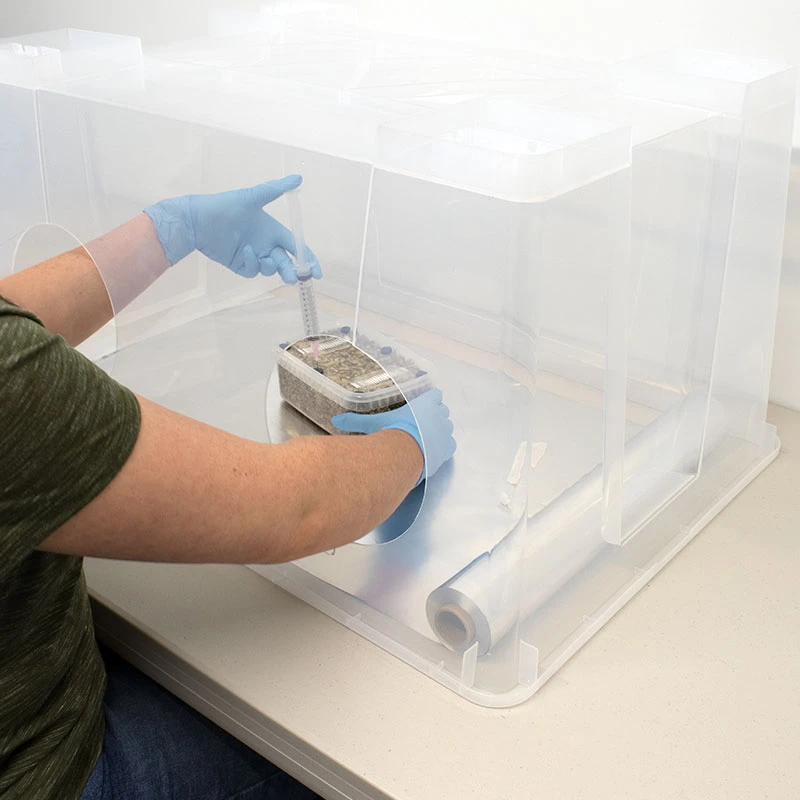
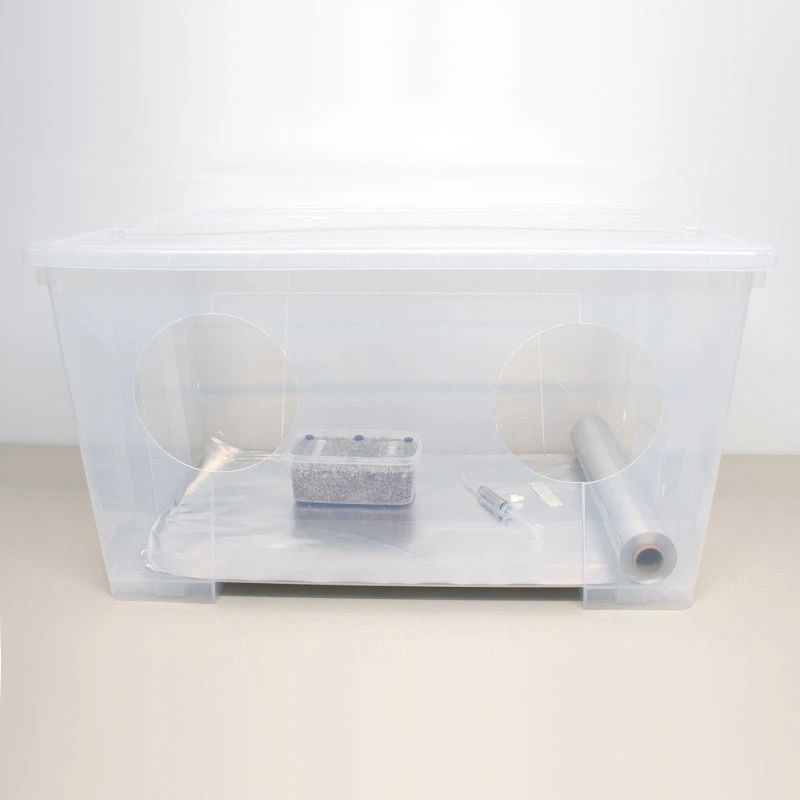
A 130 litre still air box with the arm holes already cut for you. It gives you a calm, low airflow space to work with agar, spawn and cultures, so fewer contaminants reach your sterile work.
★★★★★ 5.0 · 5 reviewsOut of stock
Want to know the moment it returns?
Pre-cut arm holes. Sandpaper included to finish the edges.
The short version
A still air box (SAB) is a large clear tub with two arm holes. You work with your hands inside it so the air stays still. Mould spores and bacteria drift on air currents, so when the air is still they settle out over a few minutes instead of landing on your open plates and jars.
This is the XL size at 130 litres, so there is room to move your arms and lay out plates, jars or bags. We cut the arm holes for you, which is the fiddly part of building one at home, and we include sandpaper so you can smooth the edges.
What it is
A still air box does one thing. It holds a pocket of air still while you work. Without air movement, the spores and bacteria floating around your room have a few minutes to fall and settle, rather than landing on your sterile work at the moment it is open.
It is not a laminar flow hood. A flow hood pushes filtered air across your work. A still air box has no fan and no filter. It removes airflow so contaminants settle. For agar work, grain transfers, cloning and inoculation at home, a SAB does the job well, and this is why most growers start here.
The XL at 130 litres gives you space to keep both hands inside, reach across the box, and lay out your tools and open containers without crowding.
How to use it
Set up away from doors, open windows, heating or cooling vents and foot traffic. Close windows and turn off any fans. Wipe the inside of the box with 70 percent isopropyl alcohol. Wash your hands, put on a mask, and wipe your gloves with alcohol too.
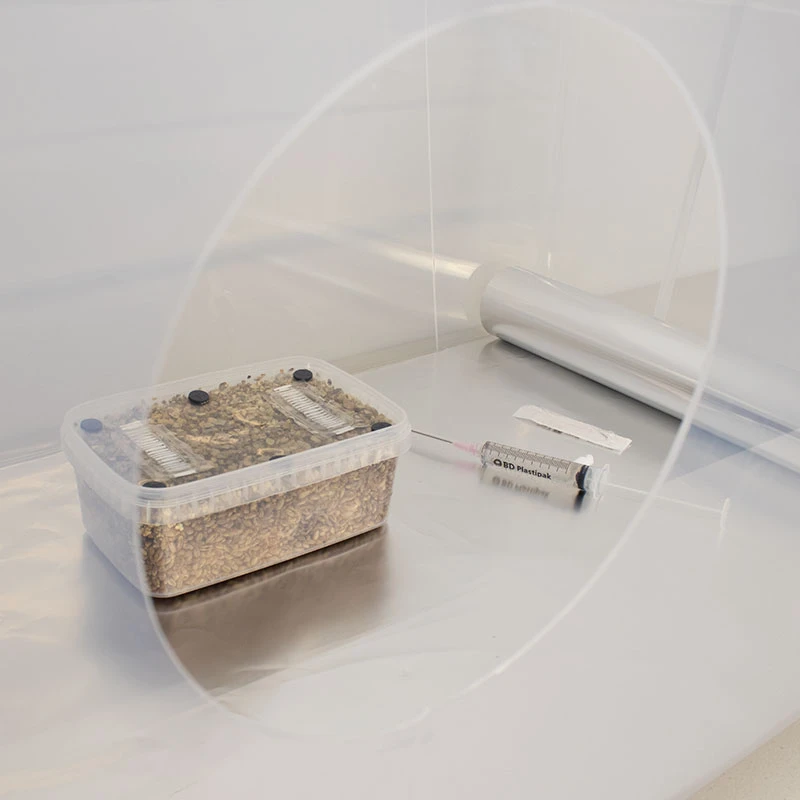
Place everything you need inside before you start: agar plates, jars or bags, scalpel, flame source and alcohol. Wipe each tool with alcohol as it goes in. Loading stirs the air, so wait a few minutes for it to settle before you open anything sterile.
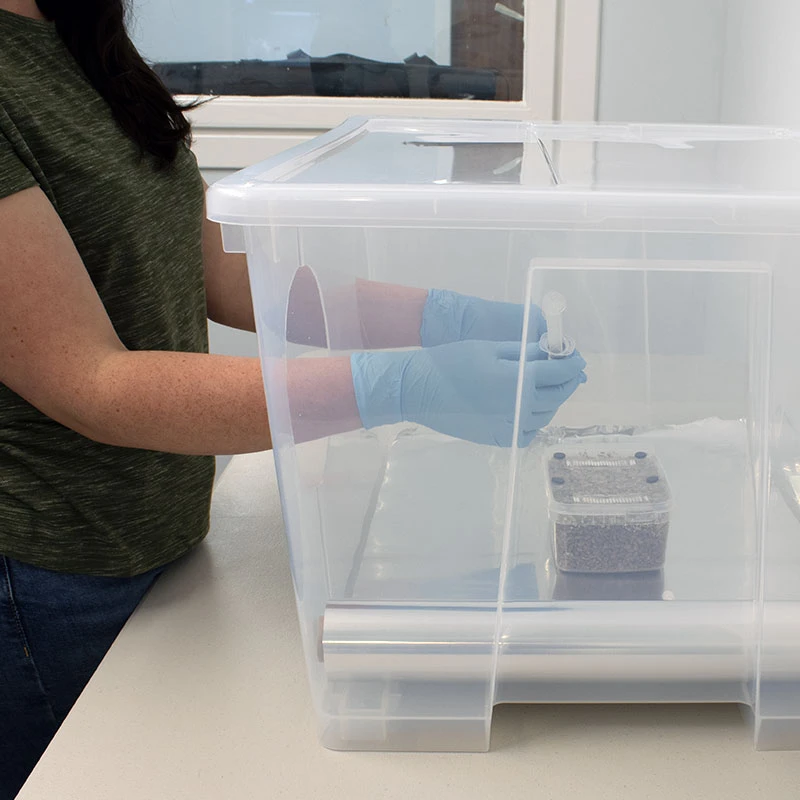
Put both arms through the holes and pause a moment for the air to re-settle. Try not to take them out again until the job is done. Every time you pull your arms out or move quickly, you stir the air and undo the stillness.
Pour or transfer agar, do your grain to grain transfer, take a clone, or inoculate your spawn with steady movements. Keep plates and jars open only for the moment you need them, then close them straight away.
This suits agar pouring and transfers, liquid culture work, grain jar and grain bag inoculation, cloning tissue, and making spore prints. For each of these the container is open at its most vulnerable moment, which is exactly when still air helps most.
Safety and care
Isopropyl alcohol is highly flammable and its vapour is heavier than air, so it pools and lingers inside a closed box rather than venting away. A flame brought into that vapour can flash. Let all surfaces dry and lift or open the box to clear the vapour before you use a lighter or any heat source. If you need to re-spray something mid session, take it out, spray it outside the box, let it dry, then put it back. Keep the alcohol away from any flame.
To finish the arm holes, run the supplied sandpaper around the cut edges until they feel smooth against your forearms. There is nothing else to assemble. Wipe the box out with alcohol before each session and store it clean and dry.
What it is not
A still air box is not sterile and does not clean the air. It reduces how many contaminants reach your work, it does not remove them. Your results still depend on good technique, clean tools and a tidy room.
It is also not a flow hood. A flow hood gives a constant filtered airstream and suits high volume or long commercial sessions. For occasional plates, transfers and inoculations at home, a SAB is the right tool.
Common questions
Not for home scale. A still air box is enough for agar work, transfers and inoculation. A flow hood is for high volume or commercial work.
70 percent isopropyl alcohol. Wipe the inside, then wipe your tools and gloves before you start. 70 percent works better than 91 or 99 percent because the added water slows evaporation and helps it kill microbes.
Give the air a few minutes to settle after you load the box, and a short pause again once your arms are inside. Settling is the whole point, so do not rush it.
Only with care. Alcohol vapour is heavier than air and collects inside without venting, and it can flash. Let surfaces dry and air the box out before bringing in a lighter or hot element.
In a quiet room with the windows and fans off, away from doors, open windows and heating or cooling vents. Drafts and foot traffic stir the air you are trying to keep still.
At 130 litres you can keep both arms inside and lay out plates, jars and tools without crowding, which makes still air work much easier.
No. The arm holes are already cut. You only smooth the edges with the supplied sandpaper.
No. It reduces airborne contaminants by holding the air still so they settle. Clean tools and good technique still matter.
What customers say
Very good quality - very pleased
works like a charm, be careful with your babies
Ask the community
How is the lid attached to the box?
Friction holds it rather tight.
At what point after inoculating can you move the SAB with the newt inoculated substrate, or start opening a door which will introduce air?
The SAB is only intended for the mission critical inoculation stage. It won't harm the kit being left in there, but it's certainly not a requirement. It will keep it dust-free though, which is always a plus.
After the inoculation process, you are done - so you can safely open the door at any time :)
Sold for use in legal gourmet mushroom cultivation and microscopy. Isopropyl alcohol is highly flammable. Keep it away from any flame and clear the vapour before using heat.
We work hard to keep this information accurate and to cite reputable sources, but the occasional mistake can still slip through. Always check the product label and a current reference before relying on any figure for something important.