
Home / Mushroom Cultivation / Spawn & Substrates / Perlite
Spawn & Substrates
Perlite
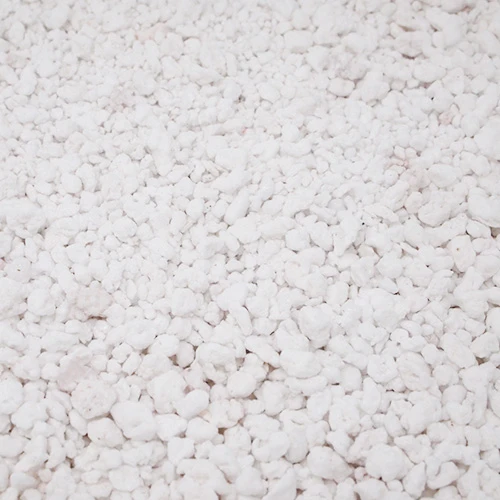
Expanded volcanic glass. Used wet as a humidity buffer in fruiting chambers, and dry as an airy amendment in substrate and casing mixes.
★★★★★ 5.0 · 3 reviewsChoose your option
Some formats are out of stock
Want to know the moment it returns?
Rinse before first use to wash off the fine dust.
Chemically inert and close to pH neutral, so it will not alter your substrate
Porous structure soaks up many times its own weight and lets it evaporate steadily
Larger grains hold more water and will not wash through chamber holes
The short version
Perlite is expanded volcanic glass. The raw rock holds a little water inside it. Heated until that water flashes to steam, it pops into light, porous white grains full of tiny air pockets.
In mushroom growing it is mostly used wet, as a humidity buffer in the base of a fruiting chamber. It holds water and lets it evaporate slowly to keep the air damp. It is also mixed dry into substrate and casing to add air and drainage. It feeds nothing, so it always works alongside a real substrate, never in place of one.
WHAT IT IS
What perlite is
Perlite is a natural volcanic glass that holds a small amount of water locked inside it. Heated to around 870C it softens and the trapped water turns to steam, expanding the rock up to around 7 to 16 times in volume. The result is light, white, porous grains full of sealed air cells.
It is amorphous, chemically inert and close to pH neutral, so it does not break down or change the chemistry of whatever you mix it with. Its job is purely physical. It holds water and it holds air. The grade we supply is coarse horticultural perlite, which suits both humidity work and substrate amendment.
HOW TO USE IT
Perlite for humidity in a fruiting chamber
The most common use is wet perlite in the base of a fruiting chamber. Fresh air drawn in through the lower holes passes over the damp grains, picks up moisture and rises, keeping the air inside damp the way fruiting mushrooms need.
Rinse it
Rinse the perlite under running water a few times before first use to wash off the fine dust. Dust clogs the surface and the chamber holes.
Soak and drain
Soak it in water until wet through, then drain off the excess. You want it damp all the way through, not sitting in standing water.
Lay the base
Pour a layer roughly 5 to 10 cm deep into the bottom of the chamber. A deeper layer holds more water and buffers for longer. Keep the lower holes clear so air can still flow in.
Raise the substrate
Stand the substrate off the wet perlite on an upturned perforated tray or rack, so the two never sit in direct contact and air moves freely between them.
Top up as it dries
As the perlite dries it stops buffering humidity. Mist the inside of the chamber or re-wet the perlite to keep the air damp. Do not flood it.
OTHER USES
In substrate and casing mixes
Perlite is also mixed dry into bulk substrate or casing to add air pockets and improve drainage, so the mix stays open and does not pack down or waterlog. Used this way it goes into the mix and is pasteurised or sterilised along with everything else, not laid in as a separate wet layer.
| Type | Expanded perlite, coarse horticultural grade |
|---|---|
| pH | Close to neutral (about 6.5 to 7.5) |
| Nature | Amorphous, inert, does not decompose |
| Main use | Humidity buffer in fruiting chambers; air and drainage in mixes |
STORAGE AND SAFETY
Storage and safe handling
Store dry in the sealed bag. Perlite does not go off, so kept dry it keeps indefinitely. It can be cleaned and reused by rinsing, draining and drying between grows.
Perlite is non-toxic and holds well under one percent crystalline silica, so health bodies treat its dust as a nuisance dust rather than a silica hazard. The thing to manage is the dry dust, which irritates the eyes, nose and lungs. Rinse or dampen it before handling, work in a ventilated space, and wear a dust mask when moving a lot of it dry. If dust gets in your eyes, rinse them with water.
Good to know
What it is not for
Perlite holds no nutrients and is not a substrate on its own. Mushrooms do not feed on it. It is a physical aid for humidity, air and drainage, used alongside a real substrate, not in place of one.
Common questions
Frequently asked
Yes. Rinse it a few times under running water to wash off the fine dust before you soak or use it.
About 5 to 10 cm in the base of a fruiting chamber, soaked then drained so it is damp but not flooded. A deeper layer buffers humidity for longer.
No. Stand it off on an upturned perforated tray or rack so air can move between them.
Whenever it starts to dry out and humidity drops. Mist the chamber or re-wet the perlite, but do not flood it.
Yes. Rinse, drain and dry it between grows. Some growers rinse it in a dilute bleach solution first, then rinse it well and dry it thoroughly.
It is non-toxic and very low in crystalline silica, but the dry dust irritates the airways. Dampen it and wear a dust mask when handling a lot of it dry.
No. It holds no nutrients. It is used for humidity, air and drainage alongside a proper substrate.
What customers say
Reviews
As above
X
Great
Ask the community
Questions and answers
No questions yet. Yours could be the first.
Sold as a horticultural and laboratory material. Cultivation supplies are for legal gourmet growing and microscopy use.
We work hard to keep this information accurate and to cite reputable sources, but the occasional mistake can still slip through. Always check the product label and a current reference before relying on any figure for something important.