Skip to content

Rare & exotic species

Rare & exotic spores.

The species beyond cubensis: the truffle-forming Psilocybe tampanensis and mexicana, the wood-loving azurescens, cyanescens and subaeruginosa, the jet-black-printing Panaeolus cyanescens, the British Liberty Cap, and the rust-printed Gymnopilus.

The catalogue

9 to study

9 strains
Gymnopilus Luteofolius

Gymnopilus Luteofolius

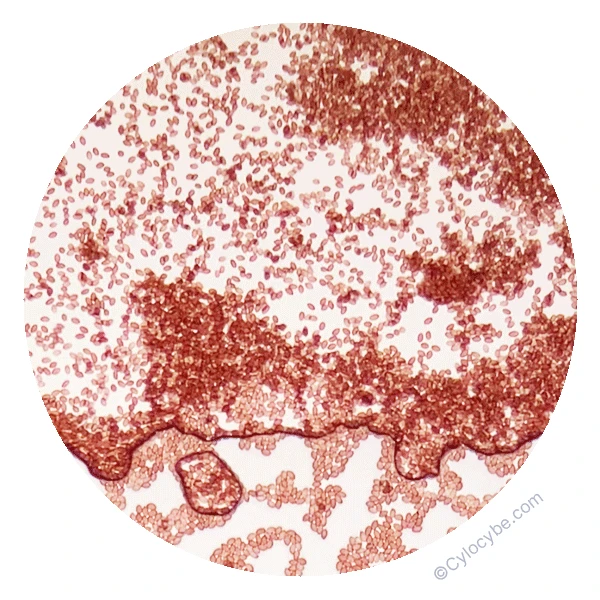
A wood-rotting rustgill that drops a bright orange-brown spore print, not the purple-brown of a Psilocybe. The single cleanest genus-level contrast you can put under a microscope. Sold for microscopy, taxonomy and collecting only.

Shop Gymnopilus Luteofolius →

MIB

Panaeolus cyanescens

MIB

A darker-fruited, lab-bred hybrid of the Blue Meanie, crossing the PHV line, the wild British Virgin Islands collection (TTBVI) and the Nec'D cross. Jet-black print, mottled gills, the lot. For spore microscopy only.

Shop MIB →

TTBVI

Panaeolus cyanescens

TTBVI

The wild Caribbean Blue Meanie. A British Virgin Islands locality line of Panaeolus cyanescens with a tamarind-tree origin story and a big potency reputation. For spore microscopy only.

Shop TTBVI →

Psilocybe Azurescens

Psilocybe Azurescens

The Pacific Northwest's cold-fruiting coastal wood-lover, reputedly one of the most potent Psilocybe species ever measured. Sold here strictly as a spore specimen for microscopy, taxonomy and collecting.

Shop Psilocybe Azurescens →

Psilocybe Cyanescens

Psilocybe Cyanescens

The caramel wood-chip Psilocybe with the undulating cap margin and a purple-brown print, scientifically born in Britain at Kew. A landmark wood-loving species and a rewarding microscopy subject. Sold strictly as a spore specimen for microscopy, taxonomy and collecting.

Shop Psilocybe Cyanescens →

Psilocybe Mexicana

Psilocybe Mexicana

The mushroom modern psilocybin science actually began with. Roger Heim named it in 1957, grew it in his Paris lab, and from that cultivated material Albert Hofmann isolated the first pure psilocybin.

Shop Psilocybe Mexicana →

Psilocybe Subaeruginosa

Psilocybe Subaeruginosa

The dominant potent wood-lover of temperate Australia and New Zealand, and the senior name of the famous subs / azzies / wavies complex. Recent genomics even suggests the Northern Hemisphere wavy caps and flying saucers may be the same organism under this older 1927 name. Sold strictly as spores for microscopy, taxonomy and collecting.

Shop Psilocybe Subaeruginosa →

Psilocybe Tampanensis

Psilocybe Tampanensis

The sclerotia-forming Psilocybe behind the "Philosopher's Stone": a sandy-meadow rarity from Florida, known to science from almost a single 1977 find, with small angular spores and a purple-brown print all its own.

Shop Psilocybe Tampanensis →

Out of stock Psilocybe Semilanceata

Psilocybe Semilanceata

The wild British grassland icon and the conserved type species of the entire Psilocybe genus. A tiny sharp-nippled conical cap that you study, print and identify, never farm. Offered strictly as a microscopy and taxonomy reference specimen.

Shop Psilocybe Semilanceata →

No strains match that search. Try a different name, or switch off the in-stock filter.

Good to know

What makes a species "exotic"

Not strength, but difference. These are separate species with their own biology: some form sclerotia (the "magic truffles"), some live on dung and drop a jet-black print, and one is a different genus entirely. Each behaves nothing like a cubensis on the slide, which is exactly what makes them worth studying.

Three spore-print colours, three genera

A spore print is the fastest genus-level tell. Psilocybe prints purple-brown, Panaeolus prints jet black, and Gymnopilus prints rusty orange. Lay three prints side by side and the genera sort themselves, which is the kind of thing these specimens are for.

For microscopy, same as the rest

However rare the species, the basis is unchanged: a dormant spore carries no psilocybin or psilocin, so these are sold strictly as microscopy, taxonomy and collecting specimens, never for cultivation.