
Home / Magic Mushroom Spores / Rare & Exotic Species / Panaeolus Cyanescens - TTBVI
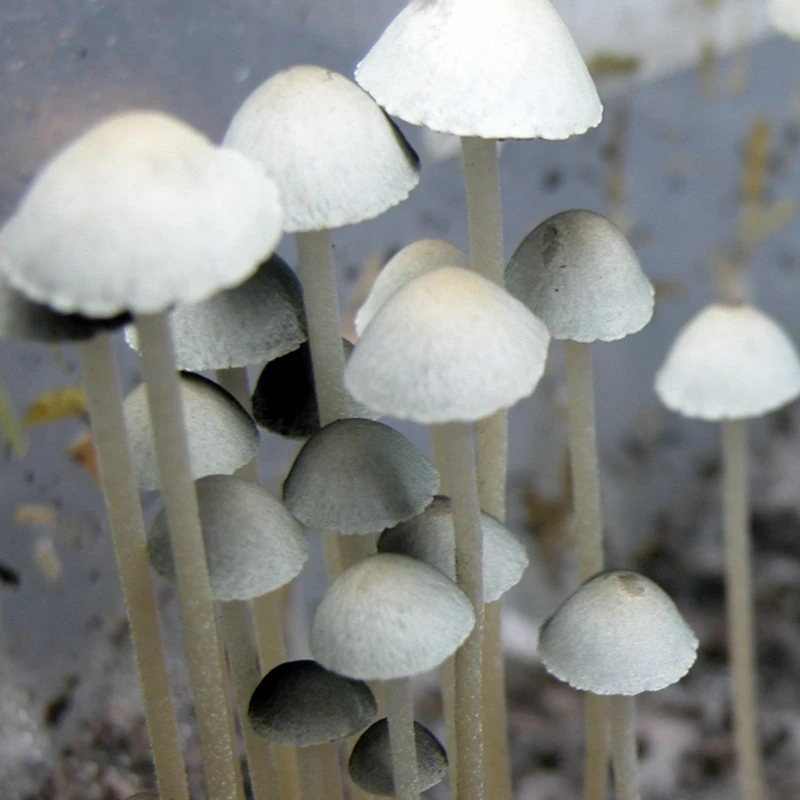
Panaeolus cyanescens
The wild Caribbean line
The wild Caribbean Blue Meanie. A British Virgin Islands locality line of Panaeolus cyanescens with a tamarind-tree origin story and a big potency reputation. For spore microscopy only.
Choose your format
Some formats are out of stock
Want to know the moment it returns?
Sold for microscopy, taxonomy and collecting only. Not for cultivation.
filled under laminar flow
plain packaging, tracked
The short version
TTBVI (Tamarind Tree British Virgin Islands) is a wild-collected locality line of Panaeolus cyanescens, reportedly found fruiting in a bag of pasture manure under a tamarind tree in the BVI. Same jet-black-printing, mottled-gilled, sclerotia-free Blue Meanie as every Pan cyan. Sold for spore microscopy only.
Straight talk
Fact vs. legend
There is a lot of folklore around this strain. Here is which bits are real, side by side.
What we actually know
- TTBVI stands for Tamarind Tree British Virgin Islands, a wild-collected locality line, not a hybrid.
- Its origin story (a bag of pasture manure found fruiting under a tamarind tree in the BVI) is well-repeated lore, not documented history.
- It is the same BVI line that appears as the BVI parent inside the MIB hybrid.
- It carries a big potency reputation (sold as "most potent tested", a 4.05 percent Cultivar Cup 2022 figure cited), but these are competition and marketing claims, not replicated lab data.
- Being a true Panaeolus cyanescens, it shares the jet-black print, mottled gills, citriform spores, blue bruising and total absence of sclerotia.
What the community says
- TTBVI is routinely sold as the "most potent cyanescens tested", sometimes with a 4.05 percent Cultivar Cup 2022 figure, but the same superlative gets pinned on MIB too.
- Vendor descriptions even contradict each other on its size, calling it both the smallest cyanescens and quite large.
- The tamarind-tree, bag-of-manure origin is a well-repeated story, not documented history; the credit chain (V.L. then Gordo) varies by source.
- The "Blue Meanie" nickname for the species reportedly began in Australia, after the Yellow Submarine cartoon villains.
- A specialist source frames Pan cyan "strains" as inherited phenotype traits, more like eye colour than fixed cultivars, with growers divided on whether the label matters.
The story
The Blue Meanie that grew under a tamarind tree
TTBVI stands for Tamarind Tree British Virgin Islands, the acronym being a geography plus the collector's handle. Unlike MIB, which is a deliberate hybrid, this is a wild-collected locality line, and its origin is one of those lovely Pan cyan stories that is well repeated but impossible to verify, so we tell it as lore.
By most accounts, a BVI local using the Reddit handle u/TamarindTreeBVI reportedly brought home a bag of pasture manure, left it (the story goes, under a tamarind tree), and later found several large Panaeolus cyanescens fruiting in it. He is said to have shared spores with a cultivator known only as V.L., who reportedly worked the genetics for a few years before the line was passed along and popularised by a grower known as Gordo. The sources differ on who deserves the credit, with some crediting Gordo with stabilising it and others giving V.L. the multi-year work, so the safe line is that the V.L.-then-Gordo chain is the fuller version, and none of the dates are documented beyond a 2022 Cultivar Cup showing.
It is best understood as the wild Caribbean parent, the locality collection that later got crossed into the darker MIB hybrid rather than a rival to it.
The reputation around TTBVI is loud. It is routinely sold as the most potent P. cyanescens tested to date and as a reliable, high-yielding, aggressively colonising line, sometimes with a figure like 4.05 percent attached from the 2022 Cultivar Cup. We report those as the competition and marketing claims they are, not as measured fact, and we note the tell that the same "most potent ever" superlative gets pinned on MIB too. The descriptions are even self-contradictory across vendors, with TTBVI called both the smallest cyanescens and quite large. As one specialist source puts it, Pan cyan strains behave more like inherited phenotype traits, similar to how eye colour expresses in people, than like fixed cultivars.
The signature
Not a Psilocybe, a Panaeolus
Before anything else, get one thing straight: this is a Panaeolus, not a Psilocybe and not a cubensis. Almost everything a collector loves about Pan cyan comes down to four features a cube simply does not have, and they are what make it such a satisfying mushroom to study.
A jet-black spore print
This is the headline. Panaeolus cyanescens drops a jet-black print, not the purple-brown of Psilocybe cubensis and its relatives. A black print is a genus-wide trait (every Panaeolus but one prints black), and the deposit is often strikingly dense, sometimes laid down with visible radial symmetry under the cap. On its own it does most of the identification work.
Mottled, variegated gills
The gills are why the genus is named "all variegated". They look spotted, cloudy and marbled rather than evenly coloured, with a paler edge. The mechanism is the teaching point: the dark spores ripen in small patches across the gill face at different times, so the surface ends up blotchy. A cube's gills darken far more evenly. These are the "mottlegills".
Intense, fast blue bruising
Handle the flesh and it stains blue, often blue-green, on cap, gills and stem, generally faster and more dramatically than a cube. It is the same documented cascade: an enzyme strips phosphate off psilocybin to make psilocin, a laccaseAn enzyme that oxidises certain compounds; here it drives the blue-staining reaction. oxidises it, and the molecules couple into blue pigments. Worth knowing: the reaction consumes psilocin, so heavy bluing is evidence the chemistry is there, not a potency meter.
No sclerotia, ever
If you came here from our Tampanensis or Mexicana truffle pages, leave that idea at the door. Panaeolus cyanescens forms no sclerotia: no underground truffle-like mass, no "stone" stage. Its whole life runs through the thin-fleshed fruiting body on dung. Sclerotia are a Psilocybe speciality, never a Panaeolus one.
The species
Meet Panaeolus cyanescens
You will still see this mushroom sold as Copelandia cyanescens, and that name has a real history. Copelandia was a genus erected by Giacomo Bresadola in 1913 for Panaeolus-like dung mushrooms carrying thick-walled, crystal-tipped cystidia on the gill face, and the tropical blue-bruisers like this one were parked there. It was sunk because those features grade continuously into Panaeolus and do not mark a separate lineage: Gerhardt's 1996 world revision treated Copelandia as a synonym, and later DNA work confirmed it, with the blue-bruising species nesting firmly inside Panaeolus. So Copelandia is dead as a genus, surviving at most as an infrageneric rank. The accepted name is Panaeolus cyanescens, even if plenty of older books and vendor lists still print the old one.
The names themselves tell the story. Panaeolus is Greek for, roughly, "all variegated" (pan, all, plus aiolos, dappled), a direct nod to the mottled gills; the epithet cyanescens is Latin for "becoming blue", after the bruising. Its nearest look-alike is Panaeolus tropicalis, another tropical blue-bruiser separated mainly on the slide by its smaller spores; also close are the milder P. cinctulus (the banded mottlegill) and the African P. africanus.
- Family
- Galeropsidaceae (by current DNA work; older books say Bolbitiaceae, Coprinaceae or Strophariaceae)
- Genus
- Panaeolus (Fr.) Quél., 1872
- Species
- Panaeolus cyanescens (Berk. & Broome) Sacc., 1887
- Basionym
- Agaricus cyanescens Berk. & Broome (conventionally 1871), from dung in Ceylon
- Old name
- Copelandia cyanescens (Berk. & Broome) Singer, 1951 (now a synonym)
- Etymology
- "all dappled" plus "becoming blue", for the mottled gills and the bruising
How you'd know it
Field marks
A delicate, wiry thing next to a chunky cube. These describe the mature wild mushroom for reference and identification.
Small pale cap that cracks
Roughly 1.5 to 4 cm across, dry, hemispheric opening to bell-shaped. Light brown when young, fading to off-white or light grey, slightly hygrophanousChanges colour as it loses moisture., and it characteristically develops fine cracks in dry weather, sometimes with a bluish tone in the cracks.
Long, thin, fragile stem
Tall and wiry relative to the cap, reported from about 6 to 12 cm long and only 2 to 4 mm thick, equal or slightly swollen at the base, finely powdered and cap-coloured. There is no ring, and it bruises blue where handled.
Grey-to-black mottled gills
Broadly adnateJoined to the stem along their width. to adnexed and crowded, starting grey and blackening as the spores ripen, with that spotty, variegated face and a paler edge. This is the single most reliable field signature of the genus.
On dung in pasture
It fruits directly on the weathered dung of grazing animals in warm grassland, most often cattle and water buffalo, sometimes horse. A dung saprotroph, not a wood or root associate, it tends to appear after rain.
Where it comes from
A dung-lover from the tropics
Panaeolus cyanescens is a textbook coprophilicDung-loving: grows on the droppings of grazing animals. mushroom. In the wild it fruits straight from the weathered droppings of big grazing animals in warm, humid pasture, most characteristically cattle and water buffalo (the carabao of Southeast Asia is a classic substrate), and it has also been recorded on horse and, more occasionally, elephant dung. It appears singly or in scattered groups after rain. It is a saprotrophFeeds on dead and decaying matter rather than a living host. feeding on the partly digested grass in the dung; it does not grow on wood and it does not partner with tree roots.
Its range is classically pantropical. First written up from Ceylon (modern Sri Lanka), it now turns up across the warm world in both hemispheres: Mexico and Central and South America, the Caribbean, the US Gulf Coast and Florida, Hawaii and the Pacific islands, the Philippines, Bali, Southeast Asia, India and Nepal, eastern Australia, South Africa and the warm fringe of southern Europe. The unifying thread is simple: warmth plus livestock. That is also why it reached places like Hawaii, where by most accounts it arrived with imported cattle in the early 1800s rather than being native.
The main event
Under the microscope
This is what you actually bought the spores for. Put a print or a drop from a syringe on a slide, and the giveaway is a combination no cubensis can fake.
- Large, lemon-shaped, opaque. CitriformLemon-shaped: rounded in the middle, tapering to a point at each end. to subellipsoid, smooth, thick-walled spores roughly 12 to 15 by 7 to 11 µm (ranges vary by author and collection). These run larger than typical cubensis-type spores.
- A clear germ pore. Each spore is truncated at one end by a distinct germ poreA thin spot at one end of a spore where a new fungus can emerge.. In a mass the spores read jet black; under the scope in KOHPotassium hydroxide, a routine mounting reagent. they are reddish-brown to black.
- The cystidia. Mostly four-spored basidiaThe club-shaped cells on the gills that grow and release the spores. (two-spored also reported). The gill edge carries cheilocystidiaSterile cells along the gill EDGE, used to tell species apart., and most formal treatments describe metuloidThick-walled, often crystal-tipped sterile cells. pleurocystidiaSterile cells on the gill FACE. on the face, though these are reported as variable and absent in some collections.
- One correction. Do not lean on "lacks chrysocystidia" to separate this from a dung Psilocybe, because those lack them too. The real separators are the black print, the lemon-shaped spores and the mottled gills, taken together.
- The legal bit, and why it's true. A dormant spore carries no psilocybin and no psilocin; that chemistry only appears later in living tissue. That is exactly why a syringe or print is a study specimen and legal to own in the UK.
In cultivation
A dung specialist, and a fussier grow than a cube
Pan cyan has a real reputation among growers, and since we want this to be the most useful page on the species anywhere, we document that biology rather than tiptoe around it, in the third person, as mycology and not a how-to.
Panaeolus cyanescens is cultivated and studied legally in some jurisdictions, Jamaica being the clearest case, since psilocybin was never scheduled there (which is also why "Jamaican" lineage labels turn up in the trade). Cylocybe supplies spores for microscopy only, never for cultivation. Everything below describes how the organism behaves where it is grown legally and what the literature records: no recipe, no parameters, no numbers.
A dung specialist by nature
Because it is coprophilic, documented cultivation mirrors its wild niche and uses dung-based substrates, most often composted cow or horse manure, frequently combined with straw. A manure component is essentially a requirement for this species, and that single fact is one of the biggest practical differences from cubensis, which is far more forgiving about what it will grow on. Straw-only setups are reported as more contamination-prone than manure-based ones.
A cased grower
Documented approaches typically include a casing layerA thin top layer of moist, low-nutrient material laid over colonised substrate to help trigger fruiting., a thin top layer over the colonised substrate described as helping trigger and support even fruiting. It is reported as warmth-loving, favouring conditions a touch warmer than cubensis, and as fussy about humidity and fresh-air exchange. We mention these as substrate and behaviour types only, with no numbers attached.
Harder than a cube
By the prevailing view it is more demanding to cultivate than Psilocybe cubensis, treated as an intermediate-to-advanced subject rather than a beginner one. The picture is genuinely nuanced: some experienced growers downplay the difficulty and praise its fast, contamination-resistant colonisation, while others find it pickier about humidity and substrate. The fair summary is that it is the fussier of the two, even though its mycelium can run fast.
Sources: Gerhardt 1996; the peer-reviewed Brazilian Copelandia treatment (Redalyc); Stijve 1992 (Persoonia); Shroomery's Panaeolus cyanescens FAQ; and Panaeolus Co-op.
Choose your format
Print, syringe, vial or swab?
Same lab-grade genetics in every option. The difference is shelf life versus how soon you are at the scope.
Spore print
Keeps longest
Spores dropped onto sterile foil, and with Pan cyan that black deposit is a thing of beauty in its own right. Stored cool and dry it outlasts everything else here, so it is the one to reach for if you are building a reference collection to keep for years.
Spore syringe
Ready tonight
Spores suspended in sterile water, ready to go straight onto a slide. The quickest way to be at the microscope this evening. Comes in 3 mL and 12 mL.
Vial & swab
Compact
A sealed glass vial is a tidy middle ground; a sterile swab is the most travel-friendly little format for adding a rare species to your set.
At a glance
The spec sheet
- Species
- Panaeolus cyanescens (Berk. & Broome) Sacc., 1887
- Basionym
- Agaricus cyanescens Berk. & Broome (conv. 1871), from dung in Ceylon
- Old name
- Copelandia cyanescens (now a synonym)
- Family
- Galeropsidaceae (older books: Bolbitiaceae / Coprinaceae / Strophariaceae)
- Common names
- Blue Meanies, Pan Cyan, Hawaiian, mottlegill
- Spore print
- Jet black, a heavy depositor
- Spore shape
- Citriform (lemon-shaped) to subellipsoid, smooth, thick-walled, with a germ pore
- Spore size
- ~12 to 15 × 7 to 11 µm (author-dependent)
- Basidia
- Mostly 4-spored; 2-spored also reported
- Gills
- Mottled / variegated, ripening in uneven patches, pale edges
- Bruising
- Intense blue to blue-green, faster than cubensis
- Sclerotia
- None (does not form truffles)
- Wild habitat
- Coprophilic, on cattle / water-buffalo / horse dung in warm pasture
- Distribution
- Pantropical and subtropical, both hemispheres
- Intended use
- Microscopy, research and collecting only
More from the cabinet
Other rare & exotic species
Dig deeper
Further reading
Independent, non-commercial sources, no shops, just good information.
- Panaeolus cyanescens on Wikipedia: the species overview.
- Index Fungorum (record 169479): the accepted-name nomenclature record.
- The genus Copelandia in western Parana, Brazil (Redalyc, peer-reviewed): primary microscopy and the Copelandia synonymy.
- Stijve 1992, Persoonia, alkaloids in P. cyanescens from various origins: the geographic potency-variability study.
- Panaeolus Co-op, "the mushroom formerly known as Copelandia": Copelandia history, citriform spores, strains as inherited phenotypes.
- Shroomery, Panaeolus cyanescens FAQ: the community cultivation and difficulty discussion.
Common questions
Frequently asked
Yes, for microscopy and research. A dormant spore contains no psilocybin or psilocin, so the spores themselves are not a controlled substance in the UK. We sell them strictly for microscopy, taxonomy and collecting, never for cultivation. The active chemistry only appears later in living tissue, which is the whole legal basis for the spores being fine to own and study.
They are the same species, so on the slide they look identical and every species-level fact here applies to both. The real difference is origin. TTBVI is a wild-collected British Virgin Islands locality line. MIB (Men in Black) is a deliberate lab-bred hybrid, and the BVI/TTBVI line is reportedly one of its three parents, alongside the PHV line and the Nec'D cross. So the relationship is parent and child, not rivals. Any further differences in colour, size or vigour are vendor and forum lore, not validated genetics.
No, and this is the single most useful thing to get right. The nickname Blue Meanie gets used for two completely different organisms in two different genera. The original true Blue Meanie is this mushroom, Panaeolus cyanescens, which gives a jet-black spore print. There is also a Psilocybe cubensis strain sold under the same nickname, and it gives a purple-brown print. So if a Blue Meanie prints purple-brown it is a cubensis, and if it prints black it is Panaeolus cyanescens. Do not confuse it either with Psilocybe cyanescens, the temperate wood-loving wavy caps, which is a totally separate species.
Hawaiian is a place-association name, not an origin claim. The species is pantropical and was first described from Ceylon (Sri Lanka). By most accounts it reached Hawaii in the early 1800s along with imported cattle, dung being its habitat, so it is not endemic there. The Hawaiian tag stuck because of the well-known island populations, not because that is its true home.
Jet black, and often a heavy, dense deposit. That black colour is the cleanest separator from any Psilocybe, which prints purple-brown to dark purple-brown. Same dung-pasture habitat and same blue bruising, but a completely different print colour. On the slide the spores are also large and distinctly lemon-shaped with a germ pore, another genus-level tell.
It has a long-standing reputation as one of the more potent psilocybin species, often described in the popular literature as carrying more active alkaloid than a typical cubensis. We report that strictly as reputation. The chemistry literature shows enormous variation between populations, with one classic study finding Hawaiian material relatively rich and Australian and Thai material nearly devoid of psilocybin, so potency depends heavily on lineage, where it grew, age and handling. None of this is dosing or use guidance.
No. Panaeolus cyanescens does not form sclerotia, so there is no truffle stage to it at all. Sclerotia, the underground resistant masses sold as magic truffles, are a Psilocybe trait found in species like tampanensis and mexicana. Pan cyan lives entirely through its thin-fleshed fruiting body on dung.
On the microscopy side it is just as easy to examine on a slide, and arguably more fun thanks to the big lemon-shaped spores and the dramatic black print. As an organism it is widely regarded as more demanding than cubensis to cultivate where that is legal, being a dung specialist that usually needs a casing layer and tighter conditions. We sell spores for microscopy only, so for our customers the only thing that matters is the slide, where it behaves beautifully.
Ask the community
Questions and answers
No questions yet. Yours could be the first.
For microscopy, taxonomy and collecting only.Sold for legal research. Not for cultivation. Spores contain no controlled substances. We trust you to be responsible.