


Psilocybe cubensis
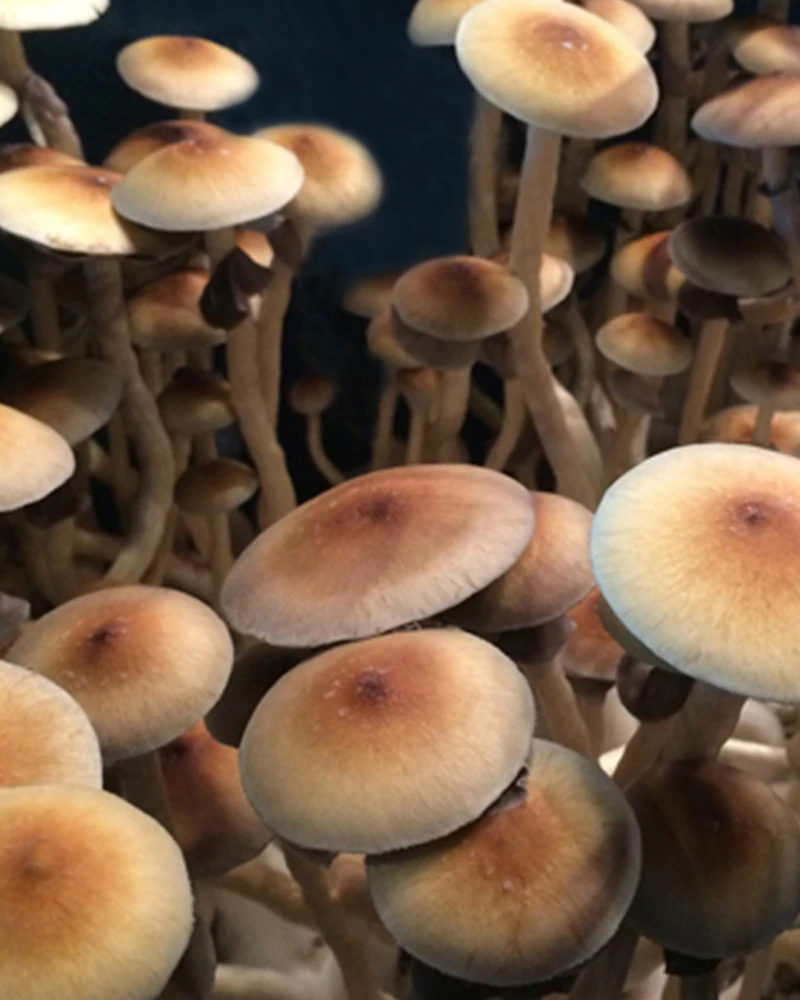
Australian Gold Cap.
An Aussie pasture classic: golden caps the colour that gave the whole country its slang for these mushrooms, plus a heavy dark purple-brown print that makes it a satisfying one to study.
We didn't have a spare year to research every "strain" of Psilocybe cubensis, so instead we prompted Claude AI and to go reseach the web - this took an entire day and cost around £400 in token usage so we aren't deleting it. In amongst the sloppy AI copy, there are some true gems of information which are in fact real after our own research too. Make of this what you will.
What's known
Here's what's meant to be true and not.
What we actually know
- Australian Gold Cap is a plain Psilocybe cubensis. Not a hybrid, not a separate species, and not low-pigment.
- In Australia, gold top, golden top and gold cap are everyday common names for wild P. cubensis itself, which is where this strain's name comes from.
- P. cubensis is not native to Australia. By most accounts it arrived with imported cattle (around 1,800 head were on the mainland by 1803) and now grows wild from northern Queensland down to southern New South Wales.
- Like other healthy normally coloured cubes it drops a heavy, dark purple-brown spore print and shows the classic blue bruising of the species when the flesh is handled.
What the community says
- The strain is said to have been isolated from a single wild fruit somewhere in southern Australia, but no collector, place or date is documented. Treat that as hearsay.
- It is described as having been passed around the Australian spore-trading scene for decades before it apparently slipped across borders to overseas vendors fairly recently.
- Vendor blurbs love to call it a high-potency, tough, mold-resistant Aussie. Remember a cube is a cube, and strength claims like that are largely cultivation talk rather than anything about the spores.
- Because it shares the Australian-pasture origin story, it sometimes gets lumped in with other Aussie strains like Blue Meanies or Wollongong. They are separate community names, not the same isolate.
Where it came from
In Australia you do not say Psilocybe cubensis at the pub. You say gold top, and everyone knows exactly what you mean. The golden-brown cap is so much a part of the local landscape that the colour became the name, and "Australian Gold Cap" is really just that same slang dressed up as a strain. So the first thing to say is that the name describes a look, not a documented pedigree.
The species itself is a relative newcomer to the continent. By most accounts it is not native at all, and rode in with the cattle that colonial shippers landed from the late 1700s onward. Give a dung-loving, warm-climate fungus that many fresh paddocks of cow pats and it does what it does best, and within a couple of centuries gold tops were a fixture of Queensland and New South Wales pasture from late spring into autumn.
As a named collector's strain the history is thin: it is said to come from a wild southern-Australian fruit, but no name, no paddock and no date survive. Take the origin as a story.
What to expect at the scope
What you can say plainly is what it is under the lens. This is normally coloured, ordinary cubensis, the kind that gives a generous dark purple-brown print and clean, thick-walled, subellipsoid spores with the usual flattened germ pore at one end. There is no albino or leucistic twist here, no famous quirk, just a good-looking pasture cube with a great Aussie nickname and a habit of catching its own falling spores on a persistent white ring.
- Psilocybe cubensis
- A Strain
- A+ Albino
- Amazonian
- APE Revert
- Australian Gold Cap
- B+
- Ban Hua Thai
- Blue Magnolia
- Blue Meanie
- Burma
- Cambodian
- Corumba Brazil
- Costa Rican
- E4K
- Ecuador
- Escondido
- Fiji
- Full Moon Party
- Golden Halo
- Golden Teacher
- Guapiles
- Gulf Coast
- Hawaiian
- Hitchhiker
- Huautla
- Jedi Mind Fuck
- Koh Samui
- Koh Samui Super Strain
- Leucistic Burma
- Leucistic Ecuador
- Lizard King
- Malabar Coast
- Mazatapec
- McKennaii
- Mexican Dutch King
- Moby Big
- Nepal Chitwan
- Nezuko
- Our Selection
- Pakalensis
- Penis Envy
- Penis Envy Uncut
- Pensacola
- Pink Buffalo
- Psylocybe Fanaticus
- Puerto Rican
- Redboy
- Rusty White
- Stargazer
- Take Mountain
- Taman Negara
- TEX PE6
- Texas Yellow Cap
- Tidal Wave
- Treasure Coast
- VZ3 (Venezuela)
- White Golden Teacher
- Yosterizii
- Z-Strain