


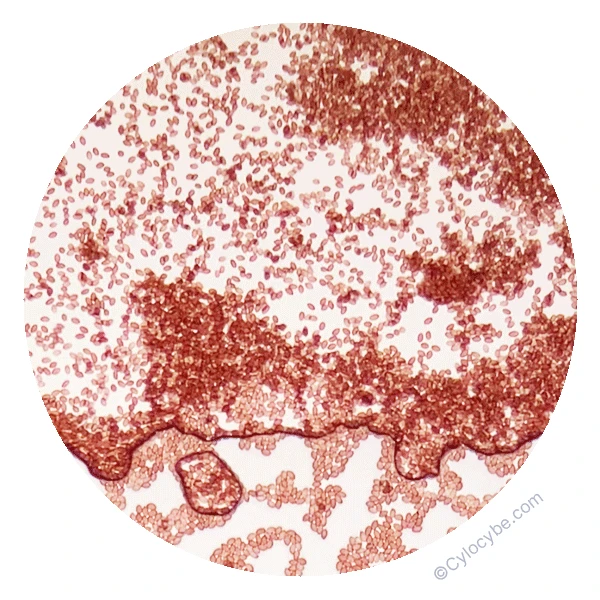
Psilocybe cubensis
Take Mountain.
A Thai mountain collection with a real name behind it: John Allen, a single wild mushroom found near a buffalo shed, and a strain most people have never heard of.

We didn't have a spare year to research every "strain" of Psilocybe cubensis, so instead we prompted Claude AI and to go reseach the web - this took an entire day and cost around £400 in token usage so we aren't deleting it. In amongst the sloppy AI copy, there are some true gems of information which are in fact real after our own research too. Make of this what you will.
What's known
Here's what's meant to be true and not.
What we actually know
- It is a plain Psilocybe cubensis, not a hybrid and not a separate species. A cube is a cube.
- It is a Thai strain, tied by most accounts to ethnomycologist John W. Allen, known as Mushroom John, who brought many wild Southeast Asian cubensis collections into circulation.
- The name traces to Tak Province in northern Thailand, where the founding mushroom was reportedly collected near Taksin Maharat National Park. It is sometimes catalogued under the longer label TMNF, said to stand for Taksinmaharat National Forest.
- Young fruitbodies are described as caramel-to-rust-brown with fine pale speckling, opening to wide, pale, saucer-flat caps on thick white stems.
- Its spore print is the standard cubensis dark purple-brown. The pigment is normal, so this is not an albino or leucistic strain.
- It is genuinely uncommon. Even long-time forum regulars have reported never coming across it, so circulating material is scarce.
What the community says
- The story goes that John Allen found the founding specimen on 1 August 2004, a single mushroom pushed up through the grass near a shed of powdered buffalo manure the park gardeners used as fertiliser, pointed out to him by a colleague, Dr Prakitsin Sihanonth.
- Some accounts instead place the original Thai collection back in the 1990s, during Allen's wider Southeast Asian travels, so even the date is not agreed.
- Allen is said to have tracked the single specimen across roughly eight flushes over about seventy days, which is where its reputation as a tenacious, persistent strain comes from.
- It carries the usual collector's tale of being slower to get going but stubbornly hardy. Treat that as community reputation about the wild strain, not a documented measurement.
- As one veteran forum moderator dryly put it about strains like this, a lot of varieties are just names on a label. Worth keeping in mind for any name this quiet.
Where it came from
Most cube backstories are a fog of anonymous handles and lost forum posts. Take Mountain is unusual because it points at a person you can actually look up. The name you will see most often is Tak Mountain, and by most accounts it traces to John W. Allen, the American ethnomycologist known as Mushroom John, who spent decades walking Southeast Asia and is credited with putting a long list of wild Thai cubensis strains into circulation. This is said to be one of them.
The telling that gets repeated goes like this. In Tak Province in northern Thailand, near Taksin Maharat National Park, Allen was reportedly beckoned over by a colleague, Dr Prakitsin Sihanonth, to look at a single mushroom that had pushed up through the grass beside a shed of powdered buffalo manure the park gardeners used as fertiliser. That lone fruitbody is said to have become the founding specimen, which he then grew on and documented across roughly eight flushes. The longer catalogue label TMNF, apparently for Taksinmaharat National Forest, comes from the same place. There is even a thread of Thai history tucked inside the name, since the famous King Taksin the Great took his own name from the town of Tak, where he served as vice-governor, rather than the other way round.
It is one of the rare cube names where the romantic origin story is actually attached to a documented collector, even if the details wobble from one telling to the next.
What to expect at the scope
Accuracy matters more than hype here. Even with a named collector behind it, Take Mountain is genuinely obscure. On the big mycology forums you will find people asking whether anyone still keeps it, and longtime regulars replying that they have never heard of it at all. Some sources also disagree on whether the founding find was in 2004 or back in the 1990s. None of that is a problem for a collector. It just means you are looking at a quiet, well-pedigreed Thai strain rather than a household name, and that the backstory deserves the usual hedging: reportedly, is said to, by most accounts.
- Psilocybe cubensis
- A Strain
- A+ Albino
- Amazonian
- APE Revert
- Australian Gold Cap
- B+
- Ban Hua Thai
- Blue Magnolia
- Blue Meanie
- Burma
- Cambodian
- Corumba Brazil
- Costa Rican
- E4K
- Ecuador
- Escondido
- Fiji
- Full Moon Party
- Golden Halo
- Golden Teacher
- Guapiles
- Gulf Coast
- Hawaiian
- Hitchhiker
- Huautla
- Jedi Mind Fuck
- Koh Samui
- Koh Samui Super Strain
- Leucistic Burma
- Leucistic Ecuador
- Lizard King
- Malabar Coast
- Mazatapec
- McKennaii
- Mexican Dutch King
- Moby Big
- Nepal Chitwan
- Nezuko
- Our Selection
- Pakalensis
- Penis Envy
- Penis Envy Uncut
- Pensacola
- Pink Buffalo
- Psylocybe Fanaticus
- Puerto Rican
- Redboy
- Rusty White
- Stargazer
- Take Mountain
- Taman Negara
- TEX PE6
- Texas Yellow Cap
- Tidal Wave
- Treasure Coast
- VZ3 (Venezuela)
- White Golden Teacher
- Yosterizii
- Z-Strain