


Psilocybe cubensis
Ban Hua Thai.
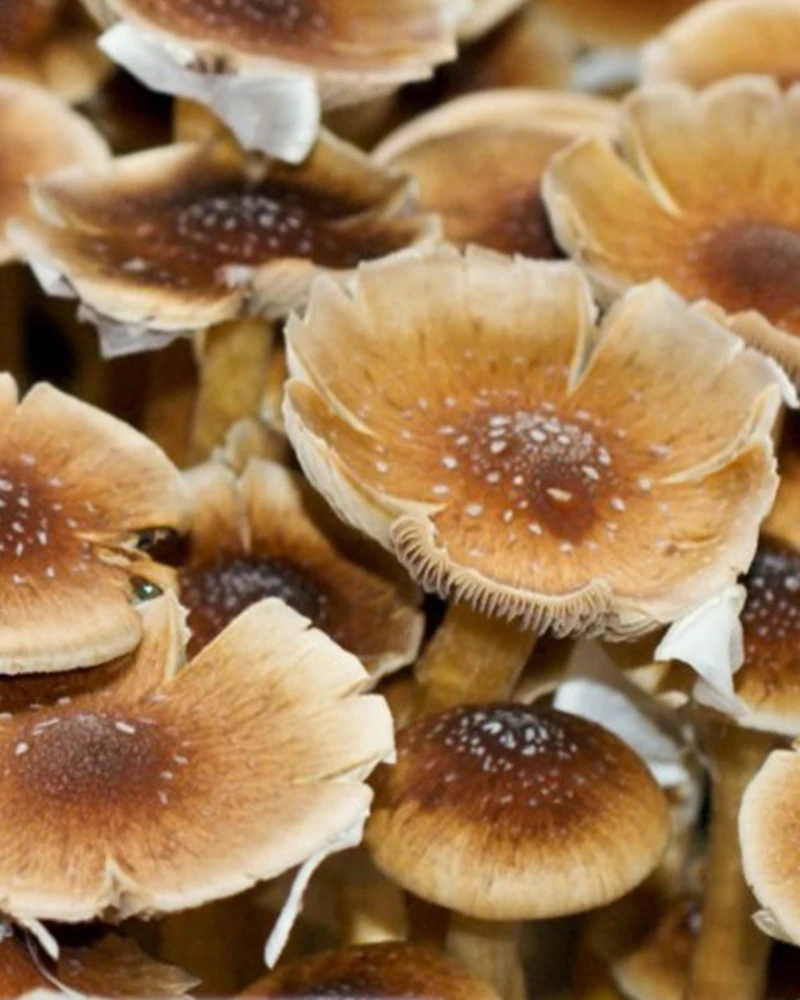
A Thai cube tied to Ban Hua Thanon, a real fishing village on Koh Samui. Reportedly tall and slender with round cinnamon-brown caps and a clean, heavy purple-brown print. Most of its backstory comes from sellers rather than records.

We didn't have a spare year to research every "strain" of Psilocybe cubensis, so instead we prompted Claude AI and to go reseach the web - this took an entire day and cost around £400 in token usage so we aren't deleting it. In amongst the sloppy AI copy, there are some true gems of information which are in fact real after our own research too. Make of this what you will.
What's known
Here's what's meant to be true and not.
What we actually know
- It is a plain Psilocybe cubensis from Thailand, not a separate species and not a documented interspecies hybrid.
- It is tied to Ban Hua Thanon, a real fishing village on the southeastern coast of the island of Koh Samui. In Thai, 'Ban' means village, so the name simply points at a place.
- Ban Hua Thai and Ban Hua Thanon are sold by overlapping vendors and share the same village name and Koh Samui origin story. Most sellers treat them as the same Thai stock, though some market Ban Hua Thai specifically as a hybrid of Ban Hua Thanon, a claim with no published lineage behind it.
- It drops a clean, heavy spore print in the usual cubensis dark purple-brown to near-black, which is what makes it a satisfying strain to study and archive.
- Documented detail on this exact strain is thin. One of the few Shroomery threads about it is a collector asking for information and being told there is next to none, which tells you how much of the rest is vendor copy rather than record.
What the community says
- The parent Ban Hua Thanon strain was a wild collection made from dung near the village in the 1990s, with the ethnomycologist John W. Allen usually credited. Allen genuinely worked that part of Koh Samui, but the exact collector, year and even the animal whose dung it grew on shift from one telling to the next, so treat the specifics as hearsay.
- Some sellers describe Ban Hua Thai specifically as a cross between Ban Hua Thanon and another unnamed Thai cube. There is no published lineage to back that up, and 'crossed with an unknown variety' is the kind of phrase that usually means the seller does not actually know.
- It is often billed as unusually potent and a fast, aggressive grower. The strength claims are the standard 'mine is the strongest' patter, and as the hobby likes to say, a cube is a cube.
- A handful of pages repeat that Koh Samui shamans once used this or a similar native mushroom in ritual. It makes a nice story, but the historical evidence for it is scarce and you should file it under stories.
Where it came from
Most famous cubes are named after a person, a colour or a joke. Ban Hua Thai is one of the rare ones tied to an actual place. Ban Hua Thanon is a real fishing village on the southeastern coast of Koh Samui, the Thai island, and "Ban" is simply the Thai word for village. So before any of the spore stories, the core of this strain is geographic: it is a Thai cubensis carrying the name of the patch of ground its parent strain is said to come from. The "Ban Hua Thai" and "Thai Ban Hua" labels you see on most UK and European shelves are that village name shuffled and trimmed.
The deeper history leans on a name the hobby trusts. Most accounts say the parent Ban Hua Thanon strain was a wild collection from dung near the village in the 1990s, usually credited to the ethnomycologist John W. Allen. That credit is not pulled from nowhere: Allen really did fieldwork around exactly this corner of Koh Samui, and the species Psilocybe samuiensis was formally described in 1993 by Guzman, Bandala and Allen from soil just west of this same village. The village on the label is documented. The precise story of who scooped up this particular cubensis, and in what year, is a good deal blurrier.
The village on the label is real and well documented. The detailed tale of who collected this exact cube, and when, is mostly vendor talk stitched around it.
What to expect at the scope
You will see Ban Hua Thai described as a cross between Ban Hua Thanon and some other unnamed Thai variety, said to explain its vigour. Be careful with that one. There is no published lineage behind it, and "crossed with an unknown variety" tends to be the phrase a seller reaches for when nobody actually kept records. The flatter, plainer reading is the one a long-time collector gave on Shroomery years ago when someone went hunting for facts on this strain and came up almost empty: by most accounts it is a standard, good-looking Thai Psilocybe cubensis. Apparently that has been enough to keep it on shelves for decades.
- Psilocybe cubensis
- A Strain
- A+ Albino
- Amazonian
- APE Revert
- Australian Gold Cap
- B+
- Ban Hua Thai
- Blue Magnolia
- Blue Meanie
- Burma
- Cambodian
- Corumba Brazil
- Costa Rican
- E4K
- Ecuador
- Escondido
- Fiji
- Full Moon Party
- Golden Halo
- Golden Teacher
- Guapiles
- Gulf Coast
- Hawaiian
- Hitchhiker
- Huautla
- Jedi Mind Fuck
- Koh Samui
- Koh Samui Super Strain
- Leucistic Burma
- Leucistic Ecuador
- Lizard King
- Malabar Coast
- Mazatapec
- McKennaii
- Mexican Dutch King
- Moby Big
- Nepal Chitwan
- Nezuko
- Our Selection
- Pakalensis
- Penis Envy
- Penis Envy Uncut
- Pensacola
- Pink Buffalo
- Psylocybe Fanaticus
- Puerto Rican
- Redboy
- Rusty White
- Stargazer
- Take Mountain
- Taman Negara
- TEX PE6
- Texas Yellow Cap
- Tidal Wave
- Treasure Coast
- VZ3 (Venezuela)
- White Golden Teacher
- Yosterizii
- Z-Strain