


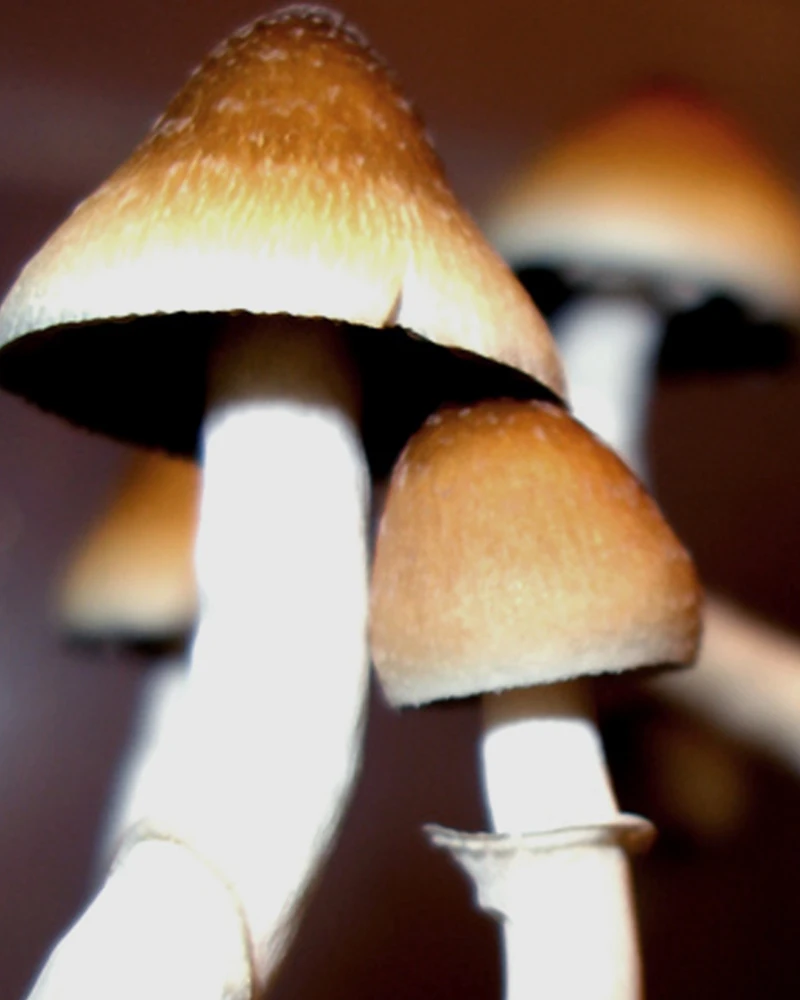
Psilocybe cubensis
Ecuador.
A hardy highland cubensis named for the Andes, where wild specimens were reportedly collected from cattle dung at altitude. Thick, meaty stems, broad caramel caps, and a dependable dark purple-brown print.

We didn't have a spare year to research every "strain" of Psilocybe cubensis, so instead we prompted Claude AI and to go reseach the web - this took an entire day and cost around £400 in token usage so we aren't deleting it. In amongst the sloppy AI copy, there are some true gems of information which are in fact real after our own research too. Make of this what you will.
What's known
Here's what's meant to be true and not.
What we actually know
- It is a plain Psilocybe cubensis named for Ecuador, the country its founder specimens are said to trace back to. Not a hybrid and not a separate species.
- Wild cubensis in Ecuador is reported from grazed highland pasture, growing coprophilic on cattle dung, broadly in the 1,000 to 2,500 metre altitude band quoted for the country's pastureland.
- As a standard normally coloured strain it drops a heavy, well-defined dark purple-brown spore print, which is what makes it a satisfying strain to study in mass.
- Like every cube, its strength sits around the species average. The high-altitude origin makes for a good name, not a documented potency boost. A cube is a cube.
- A separate, paler offshoot called Leucistic Ecuador circulates as a low-pigment body mutation of this same strain.
What the community says
- One widely repeated account credits a grower remembered only as "BIO" with collecting and printing the strain around the year 2000, near Otavalo in northern Ecuador. Treat that as hearsay, not confirmed record.
- A competing version says Ecuador reached the wider hobby back in the 1970s via ethnobotanists poking around Andean mushroom traditions. The two stories do not agree and neither is well sourced.
- Vendors love to claim the harsh, thin-air highlands bred a tougher, denser, hardier mushroom. It is a nice story, but adaptation talk like this is rarely backed by anything you could test.
- The exact collection spot drifts between tellings, from cattle pasture outside Quito to high ground near Otavalo at nearly 10,000 feet. The altitude tends to climb with the marketing.
Where it came from
Ecuador is one of those cubensis strains named straight after the place its story comes from, and like a lot of geographic strain names the label promises more precision than the paperwork delivers. The common version is that the founder specimens were wild Ecuadorian cubensis, collected from cattle dung up in the Andean highlands, somewhere in the broad 1,000 to 2,500 metre band that gets quoted for the country's grazing land. Beyond that, the trail gets blurry fast.
One popular telling credits a grower known only as "BIO" with collecting and printing the strain around 2000, reportedly near Otavalo in the north. Another version pushes the date back to the 1970s and hands it to ethnobotanists exploring Andean mushroom traditions. The collection spot wanders too, from pasture outside Quito to high ground at nearly 10,000 feet. These accounts do not line up, and none of them is what you would call documented, so the move is to file the whole origin under community lore.
The country is real, the cattle dung is plausible, and the rest is a campfire story that grew in the retelling.
What to expect at the scope
The selling point you will hear most is that thin Andean air bred a hardier, denser, beefier mushroom. It makes intuitive sense and it sounds great on a label, but adaptation claims like that are rarely backed by anything testable, and a wild population's traits do not reliably survive years of being passed hand to hand as a hobby strain anyway. What is fair to say is that Ecuador has earned a steady reputation as a robust, no-drama strain that prints heavily, which is exactly what you want from a study strain. Just take the "high-altitude superpowers" framing as marketing rather than mycology.
- Psilocybe cubensis
- A Strain
- A+ Albino
- Amazonian
- APE Revert
- Australian Gold Cap
- B+
- Ban Hua Thai
- Blue Magnolia
- Blue Meanie
- Burma
- Cambodian
- Corumba Brazil
- Costa Rican
- E4K
- Ecuador
- Escondido
- Fiji
- Full Moon Party
- Golden Halo
- Golden Teacher
- Guapiles
- Gulf Coast
- Hawaiian
- Hitchhiker
- Huautla
- Jedi Mind Fuck
- Koh Samui
- Koh Samui Super Strain
- Leucistic Burma
- Leucistic Ecuador
- Lizard King
- Malabar Coast
- Mazatapec
- McKennaii
- Mexican Dutch King
- Moby Big
- Nepal Chitwan
- Nezuko
- Our Selection
- Pakalensis
- Penis Envy
- Penis Envy Uncut
- Pensacola
- Pink Buffalo
- Psylocybe Fanaticus
- Puerto Rican
- Redboy
- Rusty White
- Stargazer
- Take Mountain
- Taman Negara
- TEX PE6
- Texas Yellow Cap
- Tidal Wave
- Treasure Coast
- VZ3 (Venezuela)
- White Golden Teacher
- Yosterizii
- Z-Strain