


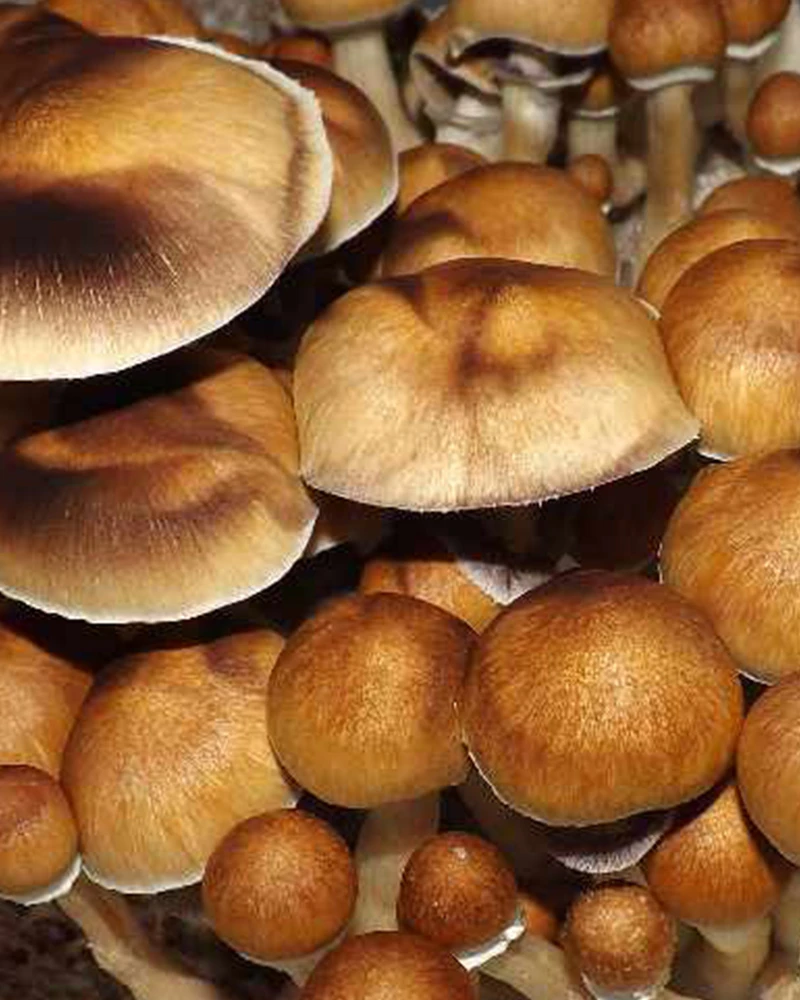
Psilocybe cubensis
Escondido.
A Mexican cube named for a "hidden" corner of Oaxaca, throwing classic caramel caps and a dependable dark spore drop. Plenty of romance in the name, a little argument over exactly which place it points to.

We didn't have a spare year to research every "strain" of Psilocybe cubensis, so instead we prompted Claude AI and to go reseach the web - this took an entire day and cost around £400 in token usage so we aren't deleting it. In amongst the sloppy AI copy, there are some true gems of information which are in fact real after our own research too. Make of this what you will.
What's known
Here's what's meant to be true and not.
What we actually know
- Genetically it is a plain Psilocybe cubensis, not a hybrid and not a separate species. A Shroomery moderator put it bluntly: Escondido is a variety, a name made by humans.
- Its name is Spanish for hidden, and every account agrees the name points to a place in the southern Mexican state of Oaxaca.
- It is described across sources as a vigorous strain with large fruitbodies and heavy spore drop, dropping a dark purplish-brown to near-black print that is easy to work with and archive.
- Oaxaca is genuinely one of the most important regions on earth for psilocybin mushrooms, the home of Mazatec and Mixtec ceremonial use, so the geographic backdrop is real even where the strain's own paperwork is thin.
- Lab data for Psilocybe cubensis as a whole spreads its strength across a wide band regardless of variety name. As the hobby saying goes, a cube is a cube.
What the community says
- The story goes that Escondido was collected from the wild in Oaxaca around the late 1990s, but no firm collector, date or herbarium record travels with the name, so treat the timeline as community lore.
- Sources cannot agree which Oaxacan place it honours. Some say Puerto Escondido, the Pacific surf town on the coast. Others point inland to the San Jose del Pacifico and Rio Escondido area in the mountains. Both share the word hidden, which is half the appeal of the name.
- Vendors lean hard on the sacred-mushroom heritage of the Mazatec and Mixtec curanderos, yet several of those same write-ups quietly admit Escondido itself has no documented ceremonial use. The connection is geographic romance, not history.
- It is occasionally billed as one of the oldest cubensis strains going. That is a nice flourish with nothing solid behind it.
Where it came from
Escondido is Spanish for hidden, and that is fitting twice over. The name is said to honour a corner of Oaxaca, in southern Mexico, the region more bound up with sacred mushroom history than anywhere else on the planet. It is also fitting because the strain's own origin is, frankly, a little hidden too. The common version is that the strain was collected from the wild somewhere around the late 1990s, but no named collector, no firm date and no herbarium voucher travel along with it. Treat that timeline as community lore rather than documented history.
The fun part is that the sources cannot even agree which place the name points to. Some say Puerto Escondido, the Pacific surf town down on the Oaxacan coast, where warm humid pastureland suits a dung-loving cube perfectly. Others point inland and uphill to the San Jose del Pacifico and Rio Escondido area in the mountains. Both readings share that one word, hidden, which is most of the charm.
The answer to "where exactly is Escondido from?" is that the name is real, the region is real, but the precise spot is still an argument the vendors are having amongst themselves.
What to expect at the scope
What is not in doubt is the backdrop. Oaxaca is the heartland of Mazatec and Mixtec ceremonial mushroom use, the tradition that ran through curanderas like Maria Sabina and the velada healing nights. Several write-ups borrow that heritage to dress the strain up, then quietly concede in the same breath that Escondido itself has no documented ceremonial history. So the romance is geographic association, not history. Underneath it all, by every description, Escondido is simply a good, vigorous Mexican Psilocybe cubensis, which is plenty.
- Psilocybe cubensis
- A Strain
- A+ Albino
- Amazonian
- APE Revert
- Australian Gold Cap
- B+
- Ban Hua Thai
- Blue Magnolia
- Blue Meanie
- Burma
- Cambodian
- Corumba Brazil
- Costa Rican
- E4K
- Ecuador
- Escondido
- Fiji
- Full Moon Party
- Golden Halo
- Golden Teacher
- Guapiles
- Gulf Coast
- Hawaiian
- Hitchhiker
- Huautla
- Jedi Mind Fuck
- Koh Samui
- Koh Samui Super Strain
- Leucistic Burma
- Leucistic Ecuador
- Lizard King
- Malabar Coast
- Mazatapec
- McKennaii
- Mexican Dutch King
- Moby Big
- Nepal Chitwan
- Nezuko
- Our Selection
- Pakalensis
- Penis Envy
- Penis Envy Uncut
- Pensacola
- Pink Buffalo
- Psylocybe Fanaticus
- Puerto Rican
- Redboy
- Rusty White
- Stargazer
- Take Mountain
- Taman Negara
- TEX PE6
- Texas Yellow Cap
- Tidal Wave
- Treasure Coast
- VZ3 (Venezuela)
- White Golden Teacher
- Yosterizii
- Z-Strain